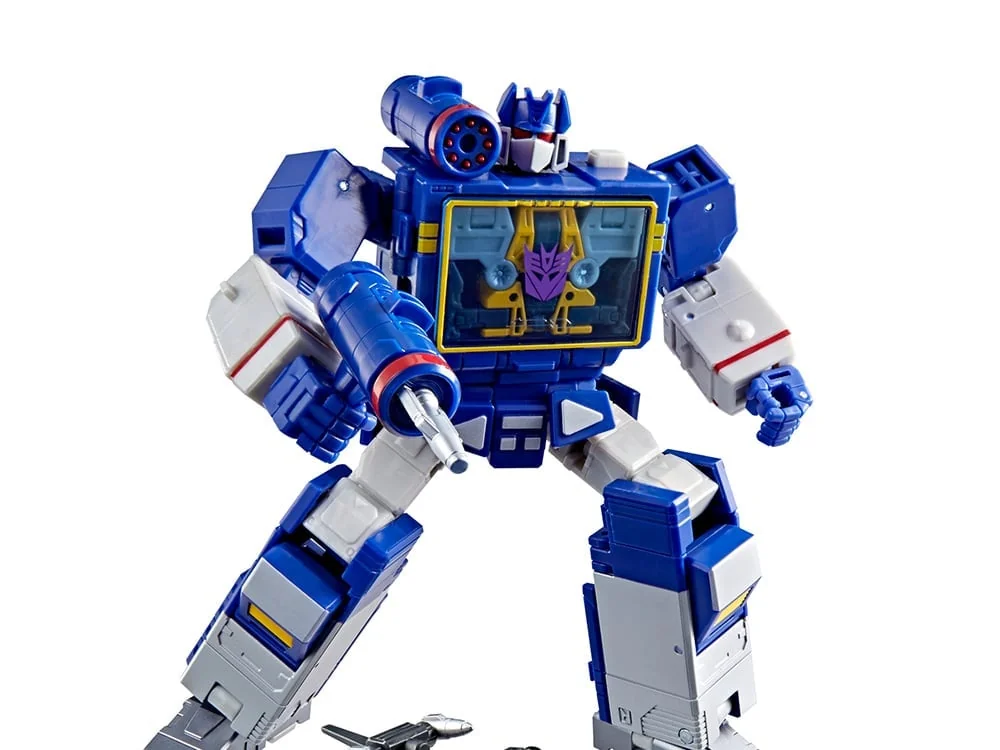
Decepticon
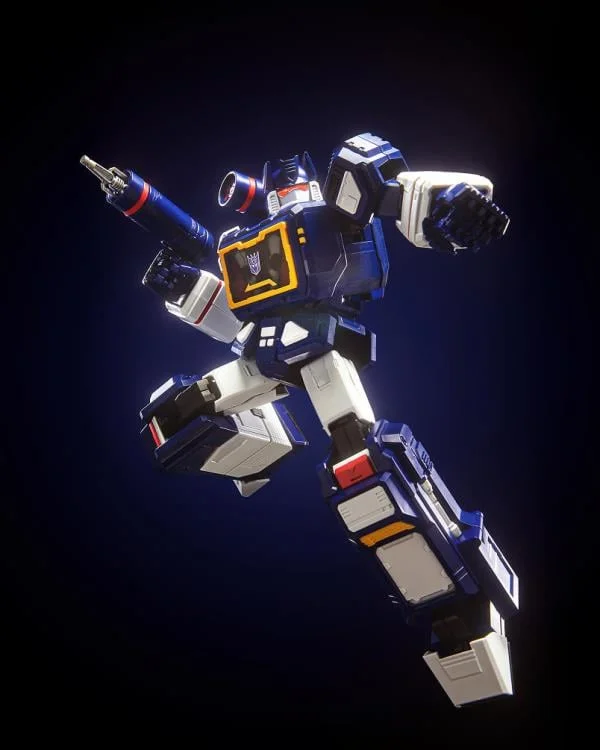
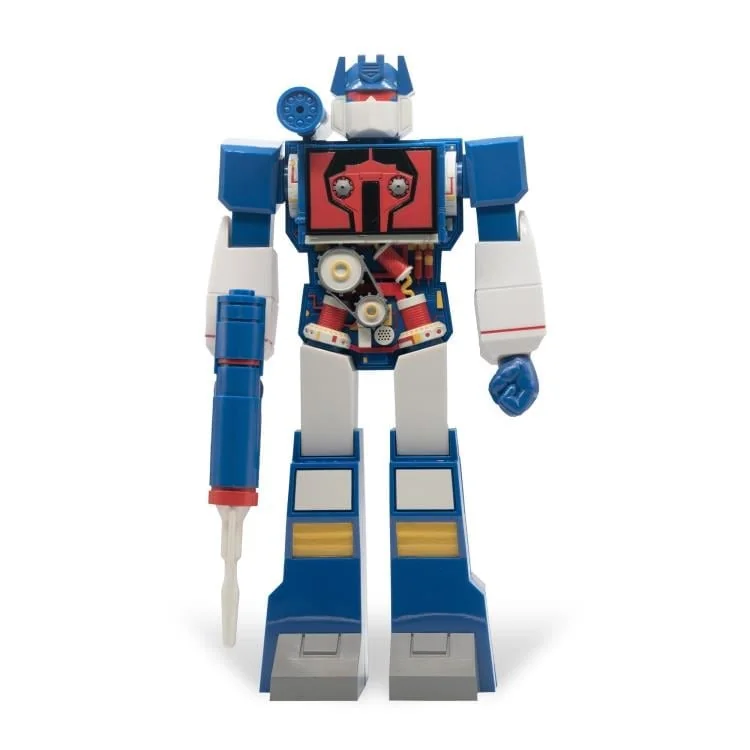
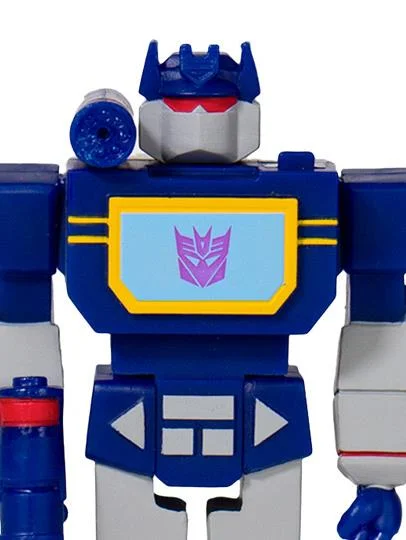
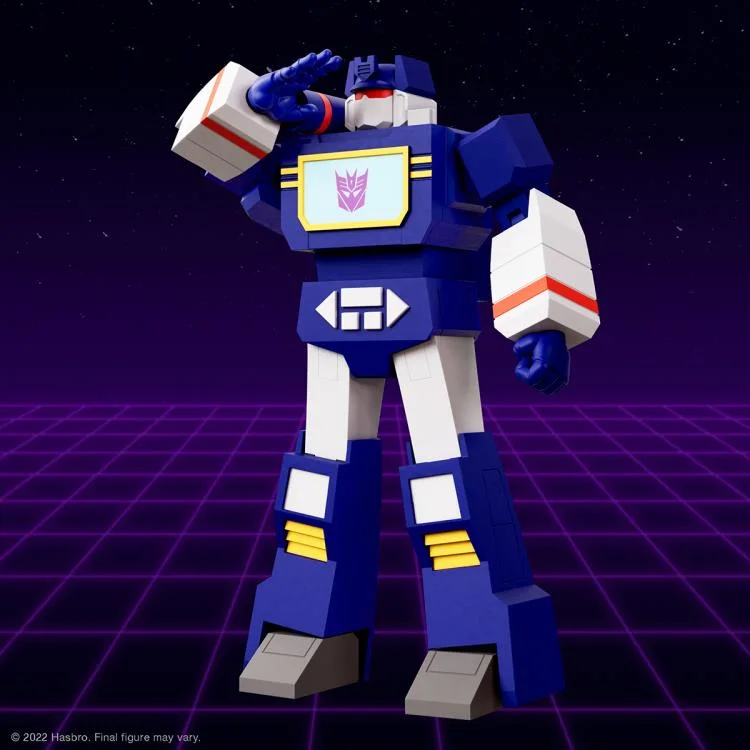
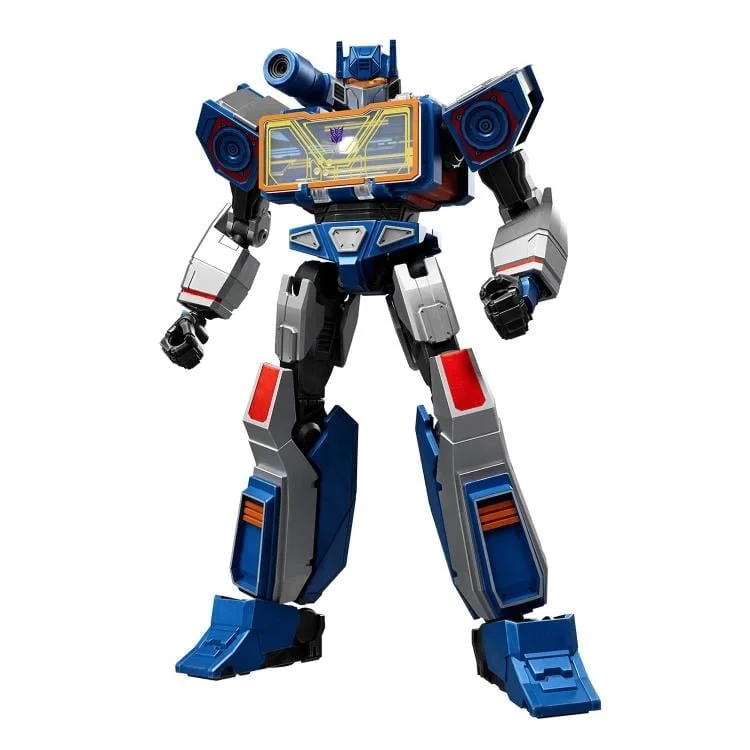
Soundwave
Decepticon Communications
"Cries and screams are music to my ears."
Utterly loyal, utterly emotionless and the best-informed Decepticon alive, which he leverages through quiet blackmail rather than ambition.
FactionDecepticon
Alt-modeMicrocassette recorder
Debut1984.09.17 . S01E01
VoiceFrank Welker
WeaponsConcussion blaster . Cassette minions
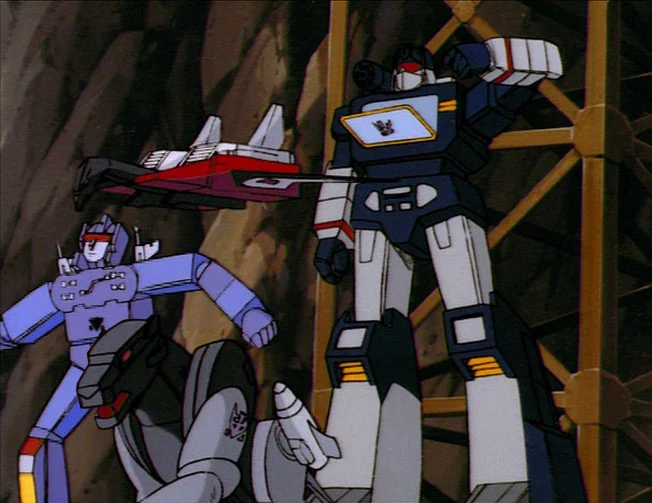
transformers.tv archive (curated)
Profile
Soundwave is the Decepticon Communications Officer and, functionally, Megatron's intelligence service. He is nominally junior to Starscream and Shockwave, but he is the only one of the three who never moves against Megatron, and that constancy is the whole of his power. He hears everything, and he uses it. Other Decepticons regard him as a snake, less because he is disloyal than because he is not, and because his position lets him blackmail anyone he chooses. In practice he is the reason Starscream's coups keep failing: Soundwave detects them and reports them, without drama and without hesitation.
His method is surveillance rather than force. He deploys a symbiotic squad of cassette troops from his own chest, Laserbeak, Ravage, Rumble, Frenzy, Buzzsaw and later Ratbat, who do the actual infiltration while Soundwave holds position and relays. The arrangement is genuinely reciprocal; they get transport and shelter, he gets eyes everywhere. The show gets a great deal of mileage from it, most memorably when Laserbeak is used to record, plant and manipulate evidence against the Autobots.
He is occasionally the centre of an episode rather than the mechanism of one. "Auto-Bop" builds a plot around him hypnotising humans through a nightclub's sound system, and pits him against the Autobot Blaster in a sonic duel that Blaster only wins by amplifying himself through the club's PA. "Blaster Blues" returns to that rivalry on a global scale.
The flat, vocoder-processed monotone Frank Welker built for him is one of the most imitated sounds in animation, and it does most of the characterisation on its own: Soundwave never raises his voice, because he never needs to.
Abilities and weaknesses
Soundwave's core function is signals intelligence: interception, decryption, jamming, recording and playback of any communication, plus the ability to read and manipulate electronic and mental impulses in some episodes. In combat he carries a shoulder-mounted cannon and concussion weaponry, and his sonic attacks can disorient or disable at close range. His defining asset is his cassette force, ejected from his chest for infiltration, aerial recon and sabotage. Documented weaknesses: he is not a front-line brawler and loses straight fights that Megatron or Shockwave would win, his cassette mode is small and fragile, and his rigid literal-mindedness makes him poor at improvising when a plan collapses. He is also entirely dependent on Megatron's favour for his standing.
Tech specs
Strength
8/10
Intelligence
10/10
Speed
3/10
Endurance
8/10
Rank
7/10
Courage
9/10
Firepower
7/10
Skill
9/10
Key appearances
| Episode | Why it matters |
|---|---|
| More Than Meets the Eye, Part 1 | Establishes the cassette gimmick immediately, with Soundwave deploying his symbionts as the Decepticons' first reconnaissance. |
| Auto-Bop | A Soundwave-led plot: he hypnotises humans through a New York nightclub's sound system and duels Blaster head-on until Blaster amplifies himself through the club PA. |
| Blaster Blues | Soundwave's communications tower blacks out Earth's transmissions, escalating the Soundwave versus Blaster rivalry to a global scale. |
| Megatron's Master Plan, Part 1 | Soundwave and Laserbeak's surveillance and doctored evidence are the mechanism by which the Autobots are framed and exiled. |
| The Return of Optimus Prime, Part 1 | His final American cartoon appearance, still at his post, now feeding intelligence to Galvatron. |
Relationships
- Megatron: the only Decepticon whose loyalty Megatron never has to question, which buys Soundwave a place in the inner command structure well above his official rank.
- Starscream: his structural opposite. Soundwave routinely detects and reports Starscream's plotting, and Starscream can do nothing about it without exposing himself.
- His cassettes (Laserbeak, Ravage, Rumble, Frenzy, Buzzsaw, Ratbat): a symbiotic arrangement, transport and shelter in exchange for infiltration and recon, and the closest thing to affection the character displays.
- Blaster: the Autobot mirror image, and the only opponent the series repeatedly matches him against on his own terms.
Comics versus cartoon
This is one of the biggest divergences in G1. The cartoon Soundwave is defined by personal loyalty to Megatron; the Marvel Soundwave is defined by loyalty to the office, and serves whoever is holding it. He transitions without friction from Megatron to Shockwave, and later takes orders from Ratbat, who in the comics is not a cassette pet but a speaking, high-ranking fuel auditor who commands the Earth Decepticons outright. Soundwave is also far more of a political operator. In 'Second Generation!' it is Soundwave, not Megatron or Shockwave, who ends their leadership brawl by demanding they accept joint command so the Decepticons do not look ridiculous on human television, and it is Soundwave who taps into Buster Witwicky's Matrix-implanted dreams in 'Devastation Derby', then quietly beams the resulting vision of combiner Transformers to Megatron behind Shockwave's back, triggering the entire leadership struggle. That is a kingmaker, not a lieutenant.
Fate
In the American cartoon Soundwave survives the 1986 movie unreformatted, serves through season three under Galvatron, and makes his final appearance in 'The Return of Optimus Prime, Part 1'. He is silently absent from the three-part finale 'The Rebirth'. Japanese continuity continues him past that point, rebuilding him as Soundblaster for the Headmasters series. In Marvel continuity he simply outlasts every leader he serves, surviving the Shockwave, Megatron and Ratbat regimes and remaining a fixture through the run.
Trivia
- The toy is Takara's Micro Change MC-10 Cassette Man, a scale microcassette recorder that originally shipped with a working headset and earphone accessory. The alt mode is why his mass-shifting is the most extreme in the line: a warrior taller than a human folds into a device a human can hold in one hand, and the cassettes eject at pocket size and then grow.
- Frank Welker performed the voice by putting his Dr. Claw register through a vocoder, producing the flat metallic monotone. Recordings of Welker performing the part unprocessed circulate widely and sound nothing like the broadcast version.
- Japanese continuity rebuilt him as Soundblaster, a black repaint with an upgraded cassette roster, when the Headmasters series continued past the American cartoon's end.
- In the Marvel comics, Ratbat is a speaking, ranking officer who commands the Earthbound Decepticons, meaning Soundwave takes orders from a character who is a voiceless pet in the cartoon.
- Soundwave's absence from 'The Rebirth' is unexplained; he and several other established Decepticons were simply written out to make room for the Headmasters and Targetmasters.
Contested
Where the cartoon, the Marvel comics and the toy bios disagree, or where a popular claim does not hold up. We record these rather than smoothing them over.
- Cartoon and comic disagree fundamentally on Ratbat: a mute cassette minion under Soundwave on screen, a speaking commanding officer above Soundwave on the page.
- The extent of Soundwave's mind-reading is inconsistent across episodes, ranging from straightforward signal interception to something close to telepathy.
- Fandom disputes whether his cartoon loyalty is genuine conviction or, as the toy bio implies, calculated self-preservation backed by blackmail.
- No G1 fiction explains how the cassettes' mass works, and it is one of the most cited scale inconsistencies in the franchise.
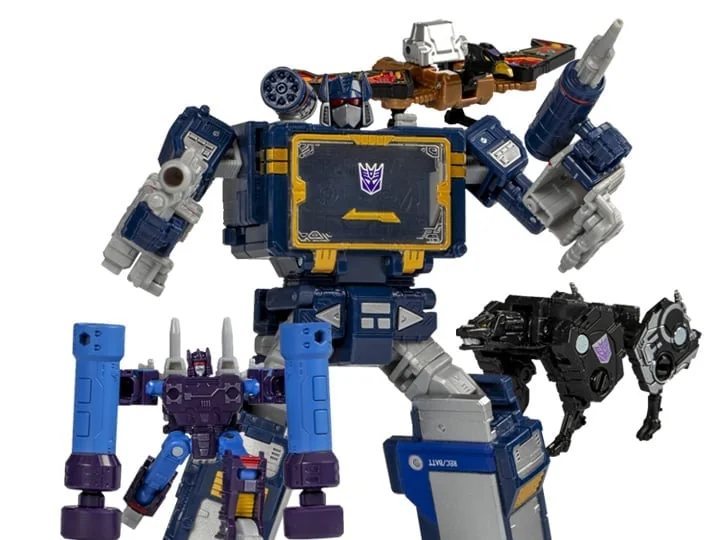
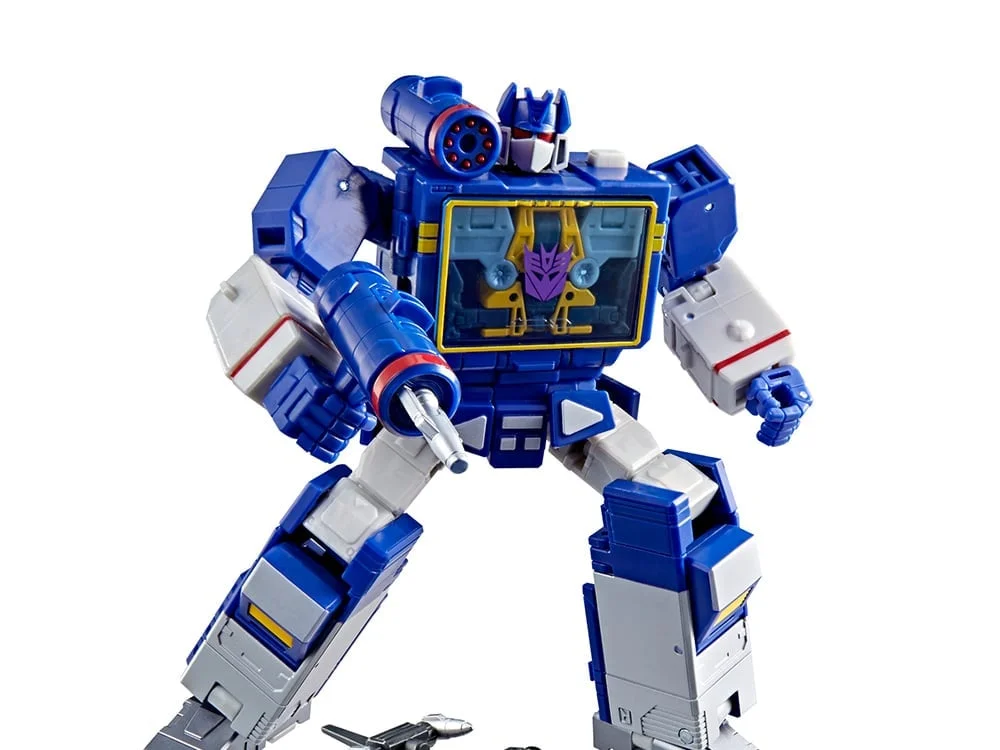
Soundwave figures
Some links are affiliate links. We may earn a commission at no extra cost to you.