Reference · The Transformers: The Movie (1986)
The ending,
explained
Hot Rod opens the Matrix inside Unicron and becomes Rodimus Prime. That is the ending. The interesting part is why it opens for him and not for the two characters who held it first, what the Matrix actually is, why Unicron’s head is still floating there in the last shot, and what the cartoon did with all of it six weeks later.
The short answer
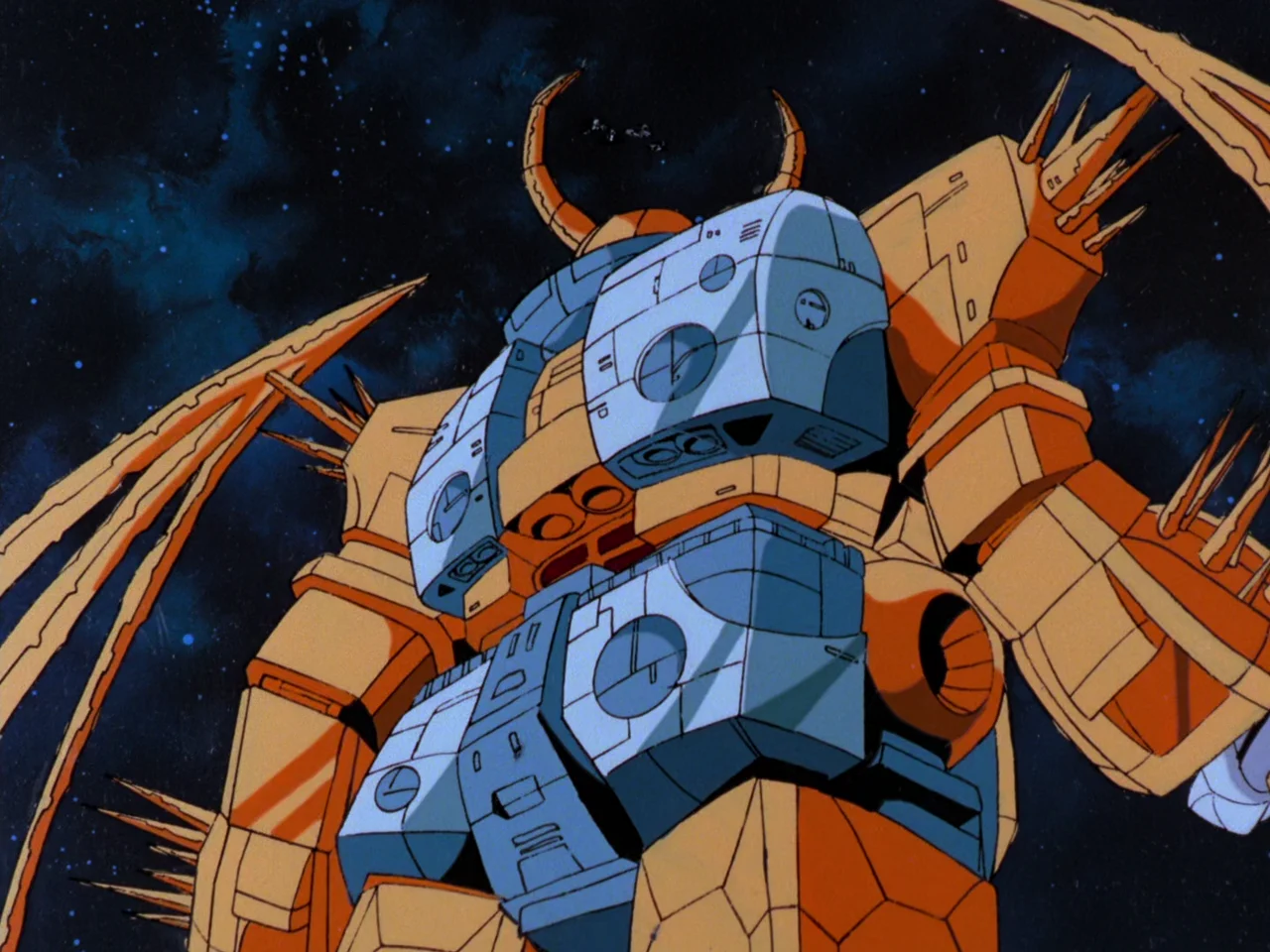
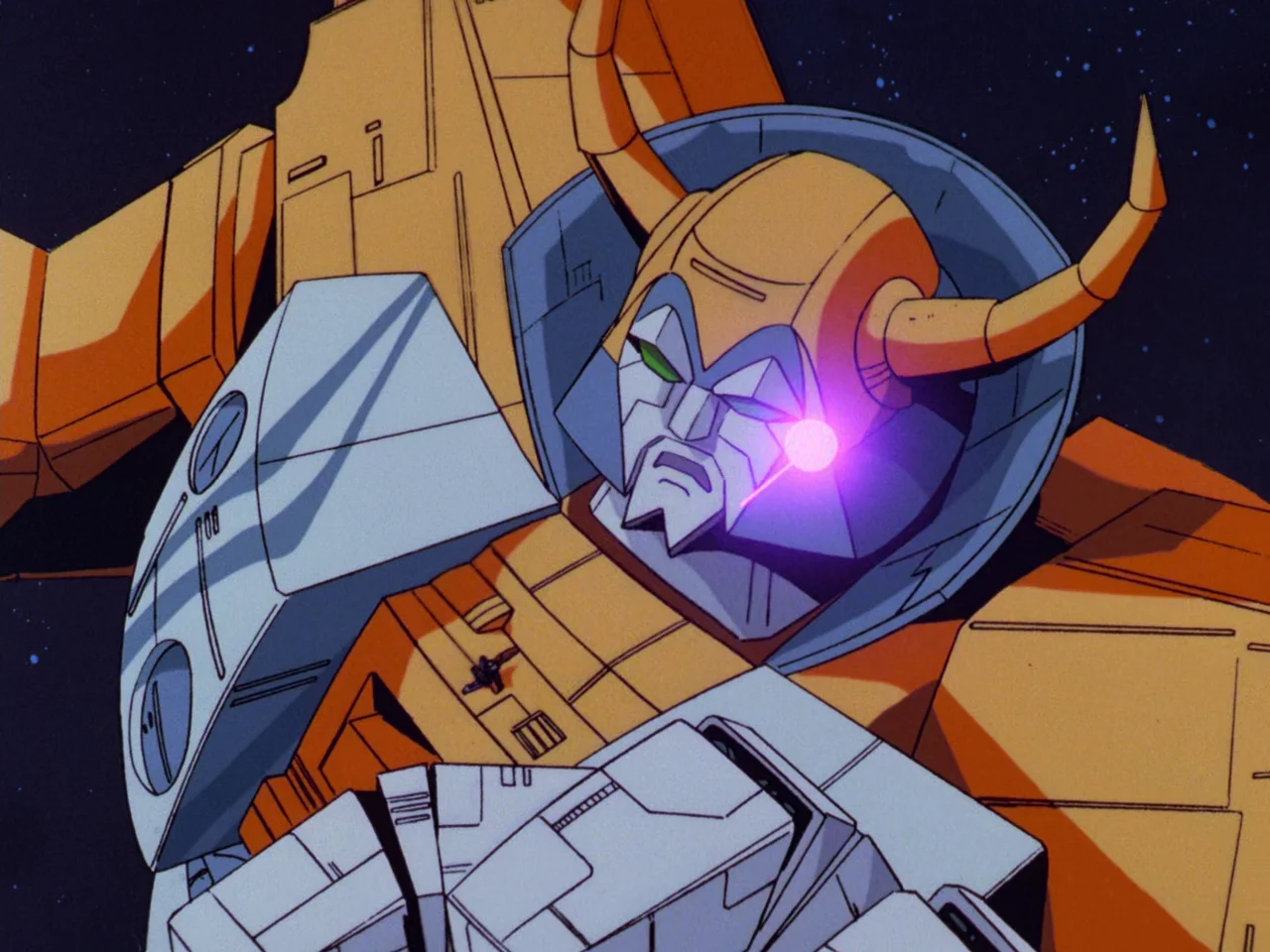
Galvatron seizes the Matrix of Leadership and tries to use it against Unicron, who eats him. Inside Unicron, Hot Rod gets a hand to the Matrix while Galvatron is strangling him. It opens, transforming him into Rodimus Prime, and its light destroys Unicron from within. Galvatron is thrown out into space and survives. Unicron’s severed head is left in orbit around Cybertron, eyes still lit, and that is the final image of the film.
The thing the film never explains, deliberately: why the Matrix opened for Hot Rod. Ultra Magnus held it and could not. Galvatron took it and died holding it.
Beat by beat
What actually happens
| Beat | What happens |
|---|---|
| Galvatron takes the Matrix | Galvatron corners Ultra Magnus on the junk planet, has the Sweeps tear him apart, and takes the Matrix of Leadership for himself. His plan is to use it as leverage over Unicron, the only thing in the universe that can destroy him. |
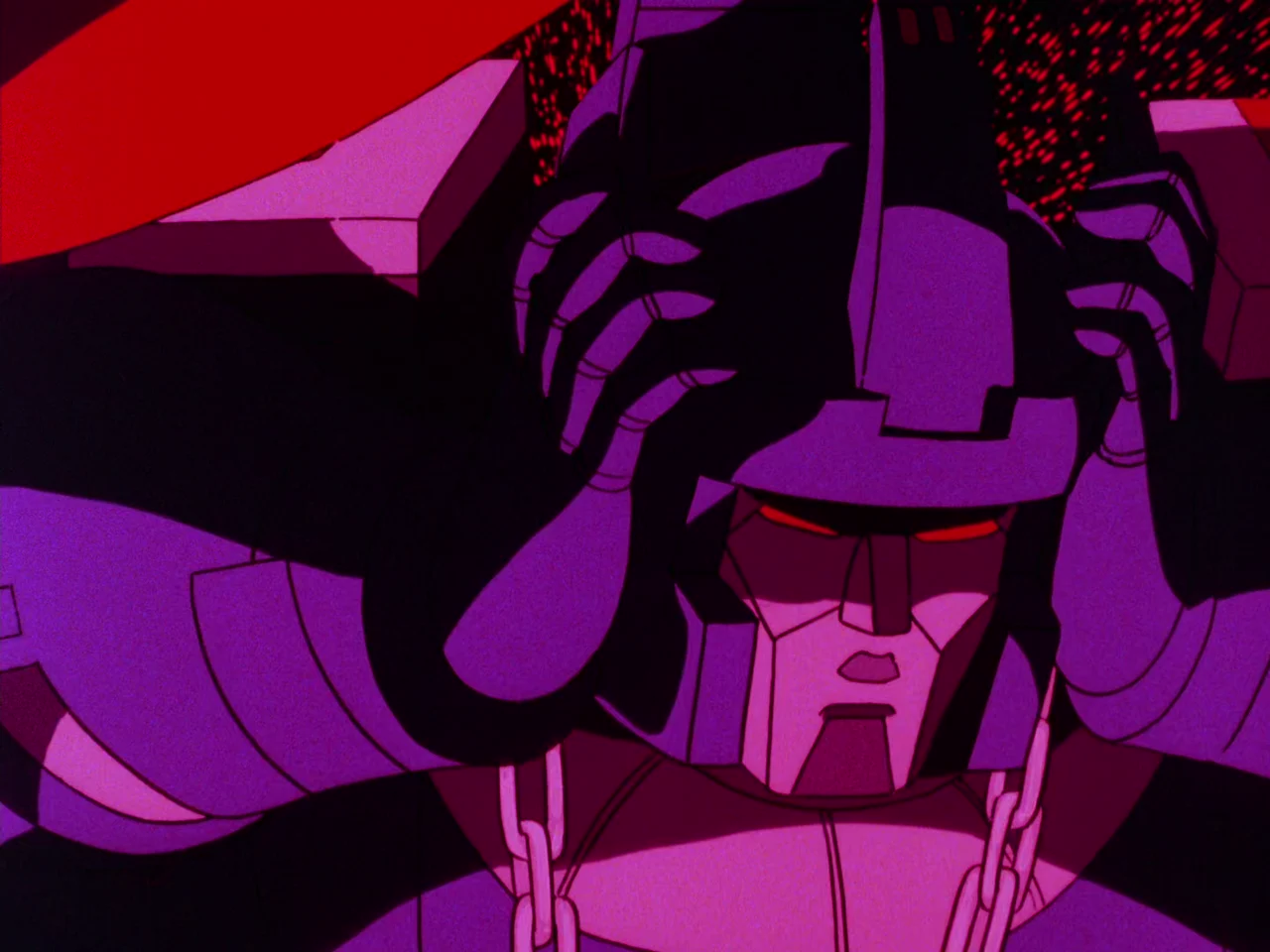
| Unicron eats him anyway | Galvatron confronts his creator holding the one weapon that can kill him, and discovers he cannot open it. Unicron simply swallows him. It is the film quietly telling you that possession of the Matrix is not the same as command of it. |
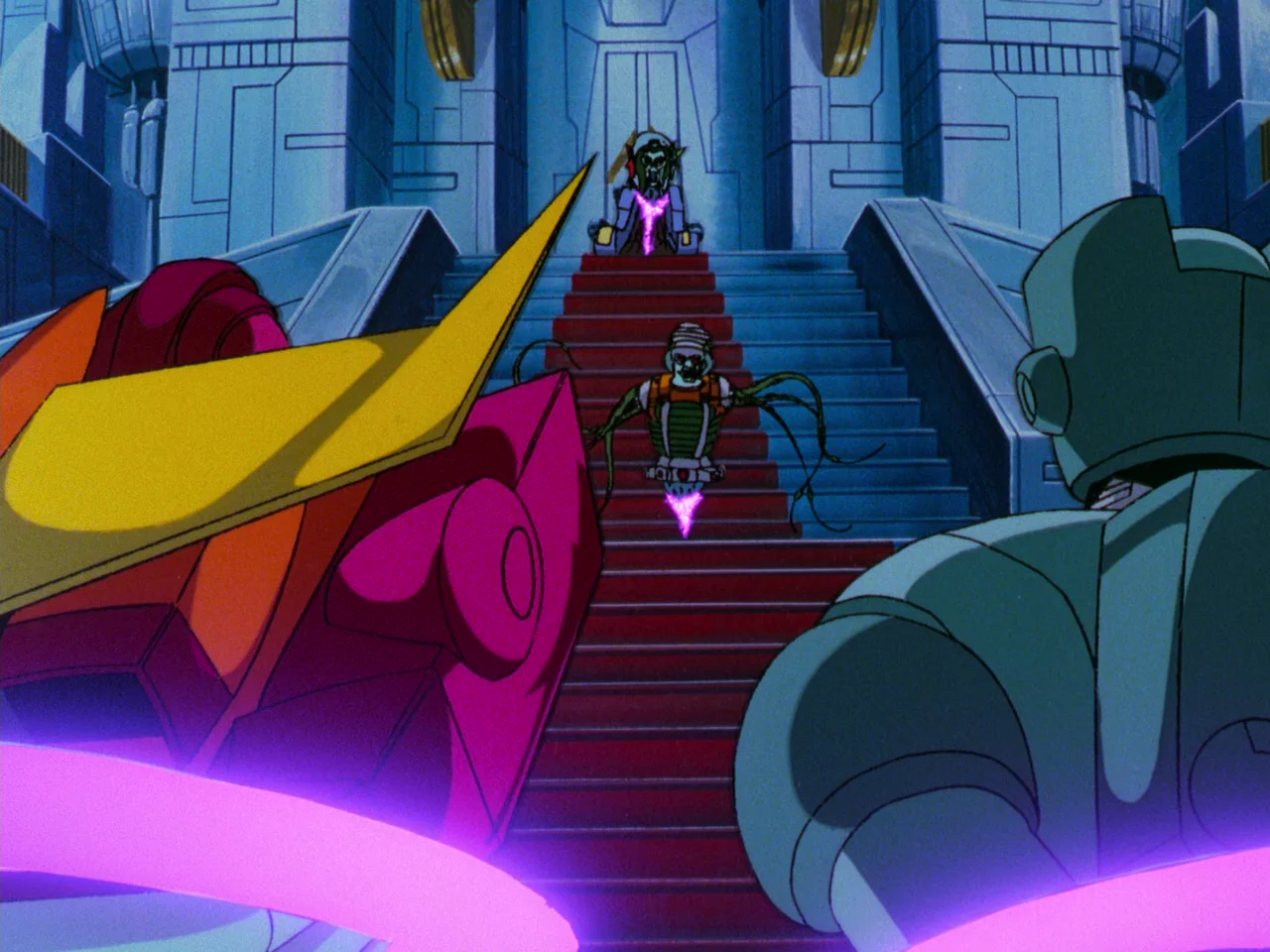
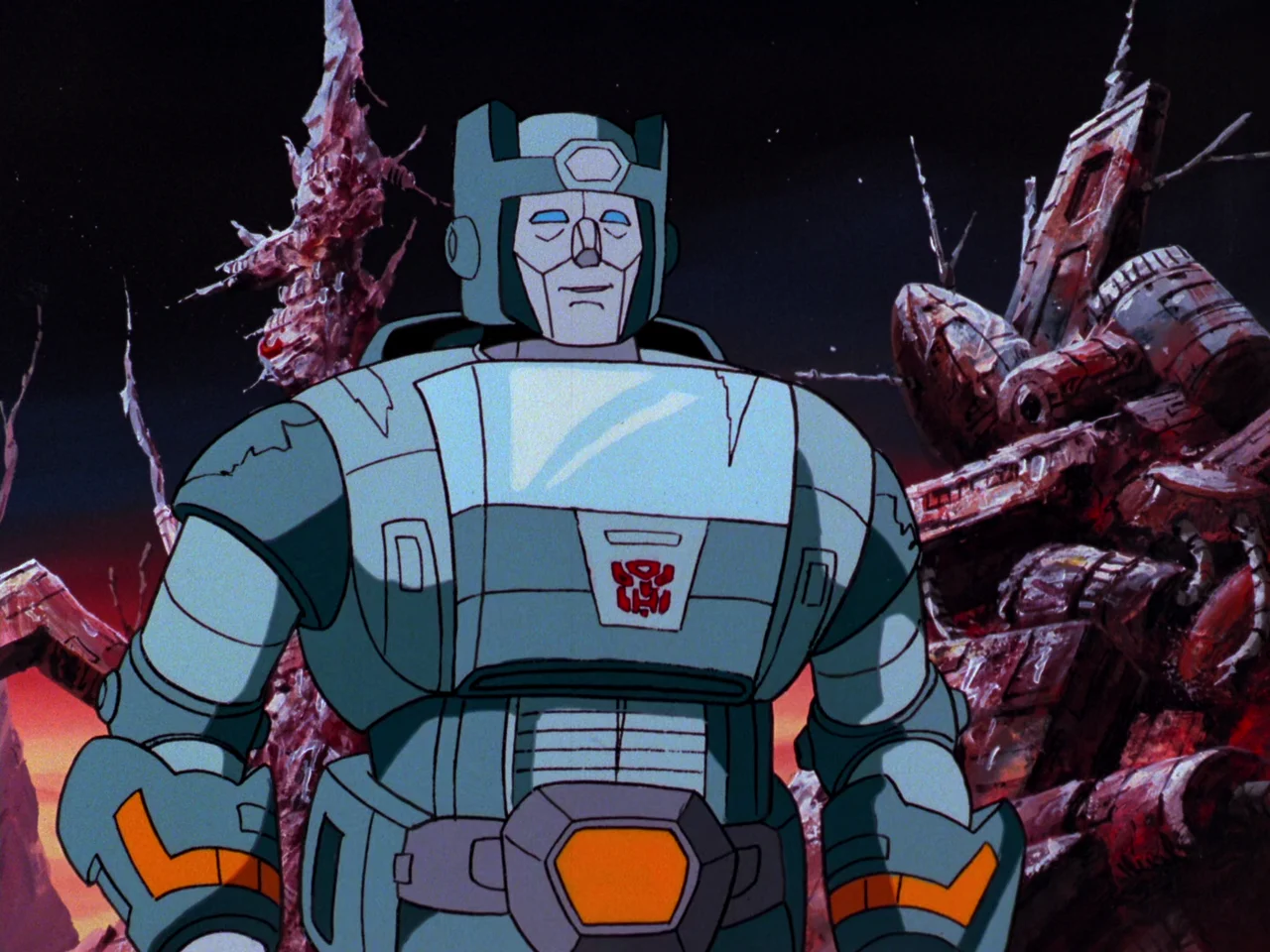
| The Autobots go in after him | Unicron transforms into robot mode and attacks Cybertron directly. Hot Rod, Kup, Arcee, Springer, the rebuilt Ultra Magnus and the Dinobots end up inside him, where they find Jazz, Cliffjumper, Spike and Bumblebee alive, having survived the moonbases. |
| Hot Rod takes it | Grappling with Galvatron inside Unicron, Hot Rod is being strangled when he gets a hand to the Matrix. This is the moment, and it matters that he is not standing nobly when it happens. He is losing. |
| The Matrix opens | Hot Rod is transfigured into Rodimus Prime. He speaks the line the whole film has been building toward, opens the Matrix inside Unicron, and the light tears the planet-eater apart from within. |
| Galvatron goes out the hole | Rodimus hurls Galvatron bodily through Unicron's hull into space. He is not killed. He returns as the Decepticon leader for the whole of the next season. |
| The last shot | Unicron is destroyed, but his severed head remains in orbit around Cybertron, eyes still lit. That is the film's closing image, and the cartoon came back to it more than once. |
The centre of it
What the Matrix of Leadership is
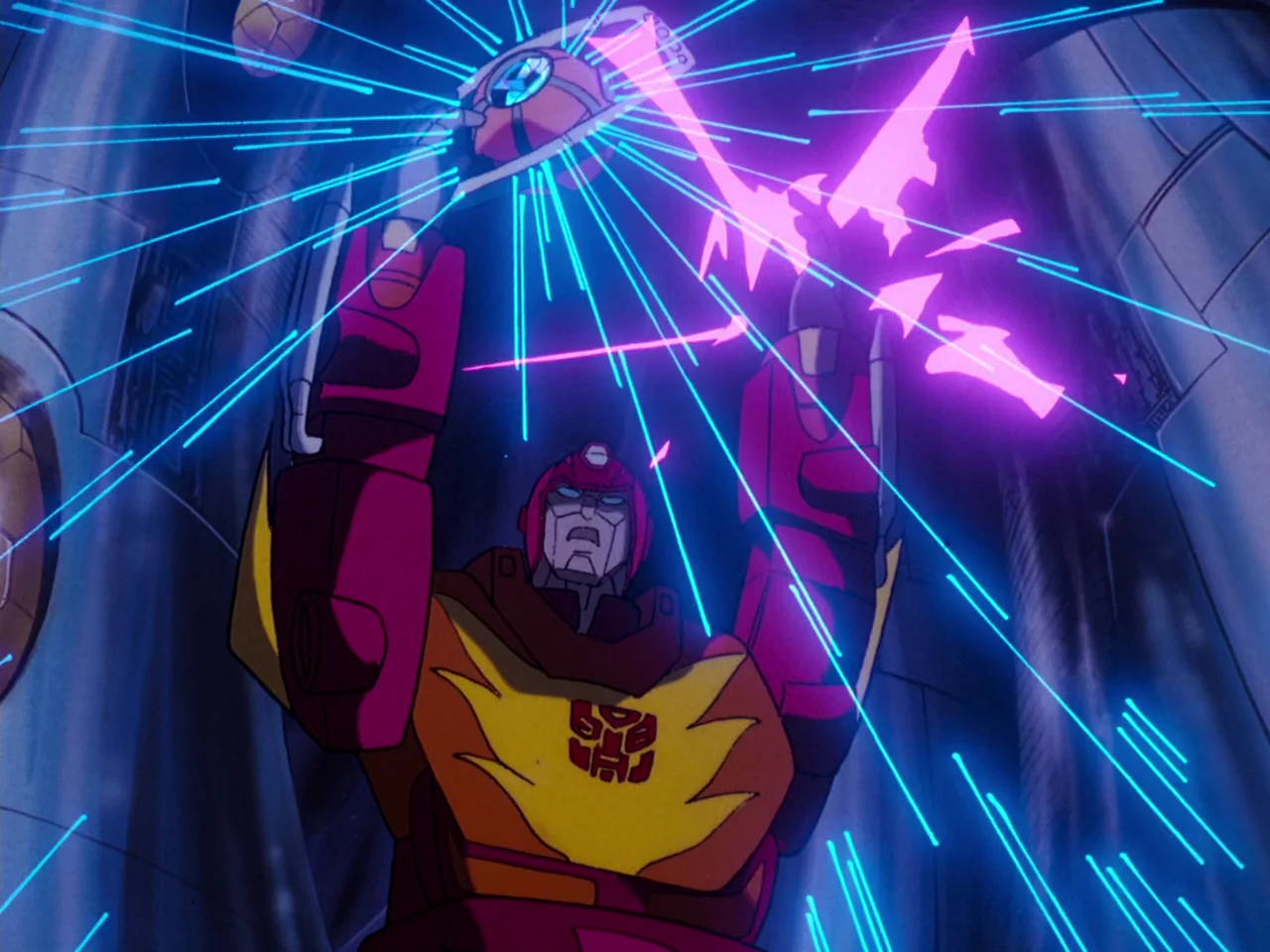
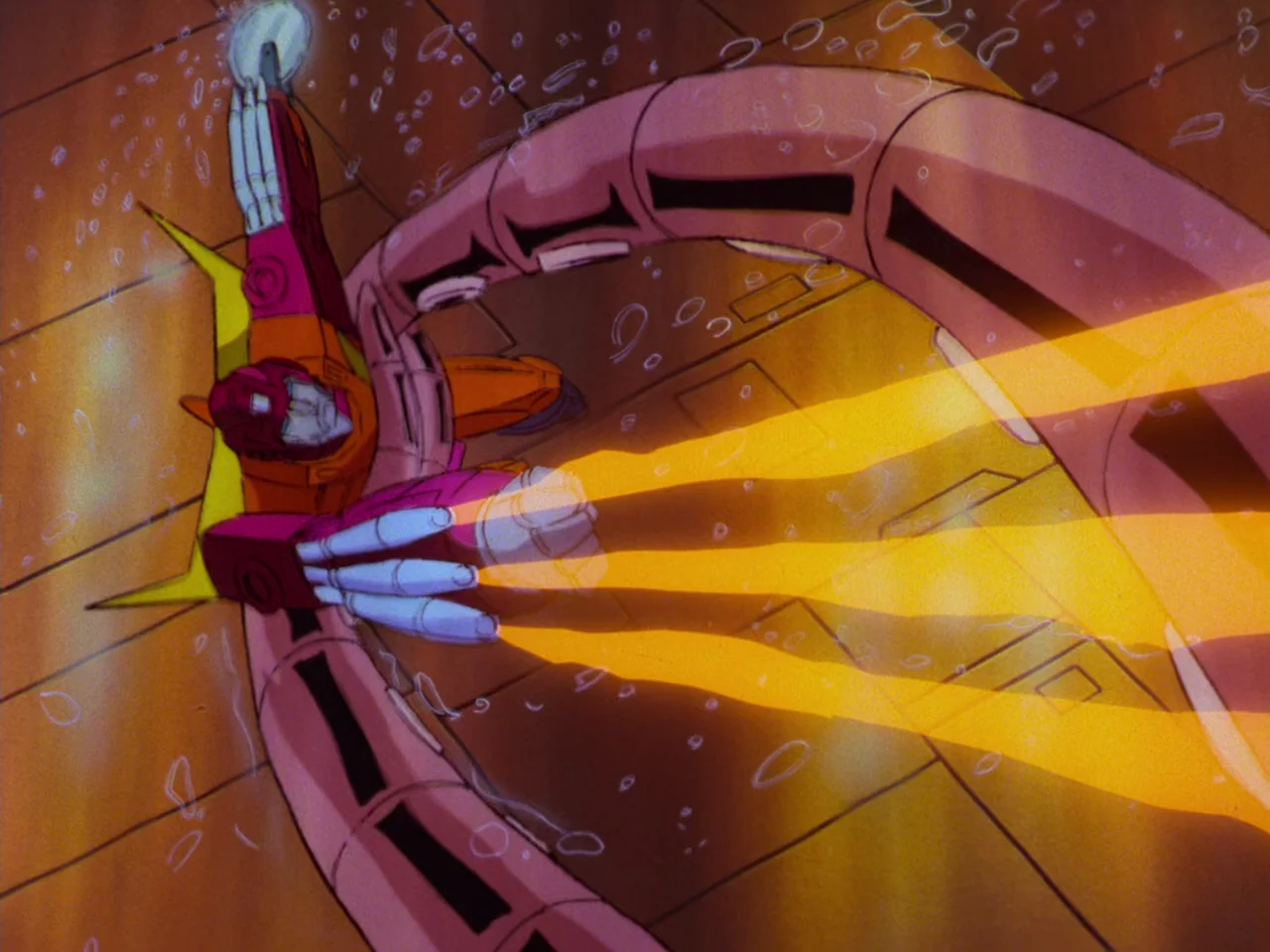
An artefact carried in the chest of the Autobot leader, handed from leader to leader. The film treats it as three things at once: a symbol of command, a repository of something like accumulated wisdom, and a literal weapon powerful enough to unmake a planet-eating god.
Where it came from is never explained. Not in the film, not in the cartoon. Worth correcting a common assumption here: the Quintessons created the Transformers, they did not create the Matrix. The film leaves its origin entirely blank, which later continuities spent decades filling in different ways.
The rule nobody states
The film gives you exactly one articulated rule about the Matrix, and it is Hot Rod who says it, not Galvatron: it will not be opened by a Decepticon. That is the whole rulebook. Everything else you have to infer from three attempts:
- Ultra Magnus commands it to open, and dies. "Open, damn it, open! Prime, you said the Matrix would light our darkest hour." It does not open. The Sweeps tear him apart.
- Galvatron possesses it, and is eaten. He holds the one weapon that can destroy Unicron and cannot make it work.
- Hot Rod takes it while losing a fight, and it opens. He is being strangled. He is not standing nobly. He simply reaches.
Why "worthiness" is not the answer
It is the obvious reading, and the film pre-emptively kills it. In the death scene, Ultra Magnus protests that he is "just a soldier, I’m not worthy", and Optimus replies: "Nor was I." The film goes out of its way to tell you that the previous bearer did not qualify either.
The other detail that breaks the worthiness reading: the Matrix glows for Hot Rod in the first act, long before he has earned anything at all. Whatever the connection is, it precedes his heroism rather than rewarding it.
Nor was I. But one day an Autobot shall rise from our ranks, and use the power of the Matrix to light our darkest hour.
Two misquotes worth knowing
It is "one day an Autobot shall rise from our ranks", not "one shall rise". That version conflates the prophecy with Prime’s earlier battle line, "One shall stand, one shall fall", which is a different moment twenty minutes earlier. They are the two most misquoted lines in the franchise and they are constantly welded into one.
The rewrite that caused all of this
There is a production reason the ending feels underexplained. An earlier version of the script had Optimus pass on a transferable "Life Spark" rather than a physical object. Replacing that with the Matrix, an artefact that appears to have preferences of its own, created the "why him and not Magnus" question, and by then there was no room in an eighty-four minute film to answer it.
So the film dramatises its answer and refuses to state it. That is either a flaw or the reason people are still arguing about it forty years later, depending on how generous you feel.
Continuity
Where the ending sits
The film is set in 2005, twenty years after season 2 of the cartoon. The jump is the mechanism that lets it retire most of the original cast and introduce a new one without explaining where anybody went. Season 3 then picks up directly from the ending, which is why the film’s final image and season 3’s recurring plots are the same object.
If you watch the film cold, it is a self-contained story about a generational hand-off. If you watch it in sequence, it is the middle of something, and the ending reads differently, because you know Rodimus is going to spend the next thirty episodes wishing he had never touched it.
Every thread the ending leaves, and how it was answered
| Loose end | What happened |
|---|---|
| Does Optimus Prime stay dead? | No, though he was meant to. He is revived as a Quintesson puppet in "Dark Awakening" six weeks after the film and dies again in the same episode, then properly resurrected in the two-part "The Return of Optimus Prime" on 24 and 25 February 1987, to cure the Hate Plague. Promos teasing his return were airing by 2 October 1986, under two months after the premiere. |
| What happens to Galvatron? | He survives being thrown out of Unicron and leads the Decepticons through season 3. In the American cartoon he never gets a definitive death. Japanese continuity gave him one, on screen, in The Headmasters. |
| What happens to Unicron's head? | It stays in orbit around Cybertron and is reactivated more than once, including by Starscream's ghost, who tries to use it to get himself a new body. Whether the film "killed" Unicron is a question the franchise has deliberately never closed. |
| What about Starscream? | Galvatron disintegrates him at his own coronation, and he comes back as a ghost. He haunts the Decepticon Crypt, possesses Cyclonus and later Scourge, and is one of the few characters whose death made him more interesting. |
| And Rodimus Prime? | He leads the Autobots for the rest of season 3, visibly uncomfortable with it the whole time, and hands the Matrix back the moment Optimus returns. The film ends on his triumph; the series spends thirty episodes on his doubt. |
| Who are the Quintessons? | Introduced here as the arbitrary judges on Quintessa, and later established as the manufacturers of the Transformers themselves. A common error worth correcting: they created the Transformers, not the Matrix. The Matrix's origin is never explained in the cartoon. |
The irony worth sitting with
The entire film is built to hand the franchise to a new generation, and the audience rejected the hand-off so completely that Optimus Prime was back on television within six months. Promos teasing his return were airing by early October 1986, roughly eight weeks after the film opened. The ending is a triumph that the series spent its next season walking back.
Which version you watched
Why your copy might differ
Several real differences exist between releases, and a great many imaginary ones. The real ones first:
- Two swear words. Spike’s "Oh shit, what are we gonna do now?" after the moonbase self-destruct fails, and Ultra Magnus’s "Open, damn it, open!". Cut from some releases, sometimes one and not the other.
- Megatron’s green blood was painted out entirely on some early home-video releases.
- The Matrix hand-off was re-cut on some editions so that Ultra Magnus simply takes the Matrix from Prime, rather than it falling and Hot Rod catching it. The edit was botched: the replay of Hot Rod catching it on Unicron’s monitors was left in.
- The European and UK version opens with a scrolling text crawl and closes with narration reassuring you that Optimus Prime will return.
That third one is worth dwelling on, because it damages the ending. Hot Rod touching the Matrix first is the structural payoff of the entire film. Unicron literally replays that catch on his monitors. Editing it out removes the setup and leaves the payoff dangling.
Two things that are not true
There is no uncut, ultra-violent version. The myth grew out of those profanity edits, which in the 1990s let people advertise "uncut" tapes online. No storyboard, interview or print element supports a gorier cut existing.
The widescreen disc did not crop the film. It restored the theatrical matte. The film was animated 4:3 and matted in projection, so fullscreen home video actually shows you more picture than cinema audiences ever saw, not less. This is comfortably the most common fan error about this film, and it comes up every time it is re-released.
Questions
Everything people ask
Hot Rod, grappling with Galvatron inside Unicron, gets his hands on the Matrix of Leadership. It opens for him where it would not open for Ultra Magnus or Galvatron, transforming him into Rodimus Prime. He uses its light to destroy Unicron from the inside, throws Galvatron out into space, and the film closes on Unicron's severed head left in orbit around Cybertron.
An artefact carried in the chest of the Autobot leader and passed from leader to leader. In the film it is both a symbol of command and a literal weapon, containing power capable of destroying Unicron. Its origin is never explained in the cartoon. What the film establishes is that it cannot simply be taken and used: Ultra Magnus holds it and cannot open it, Galvatron takes it and is eaten holding it, and Hot Rod opens it while being strangled.
The film never states a rule, and that is deliberate. The only rule anyone articulates is Hot Rod's own line that it will not be opened by a Decepticon. The tempting answer is worthiness, but Optimus pre-empts that reading in the death scene: Ultra Magnus says "I am just a soldier, I'm not worthy" and Prime replies "Nor was I." The film dramatises its answer rather than explaining it, which is why the fandom has been arguing about it for forty years.
His body is destroyed, but his head survives in orbit around Cybertron with the eyes still lit, which is the film's final shot. The cartoon reactivated it more than once afterwards. The franchise has never given a clean answer, and given what Unicron is meant to represent, it probably never will.
The exact wording is "one day an Autobot shall rise from our ranks and use the power of the Matrix to light our darkest hour". It is very widely misquoted as "one shall rise", which conflates it with his earlier battle line "One shall stand, one shall fall". Two different moments, twenty minutes apart.
In 2005, twenty years after the second season of the cartoon. The time jump is what lets the film retire most of the original cast and introduce a new one, and season 3 of the series picks up directly from where the film ends.
No, the film stands alone. But the ending changes meaning if you know what follows, because season 3 immediately undercuts it: Rodimus spends the entire season doubting himself, and Optimus Prime is back within six months of the film's release.
The ending itself was not, but the mechanism was rewritten late in development. An earlier version had Optimus pass on a transferable "Life Spark" rather than a physical object. Swapping that for the Matrix, an artefact with its own apparent will, is precisely what created the "why Hot Rod and not Magnus" question the script then had no room to answer.
Keep reading
Related
Who dies in the movie
All fourteen, and the toy-line decision behind it.
In cinemas40th Anniversary tickets
Back on the big screen in 4K from 17 September 2026.
TrackingThe new post-credits chapter
A brand-new ending, forty years later.
The hubThe Transformers: The Movie (1986)
The complete record of the film.
ArchiveThe cartoon archive
Every continuity, including the season that follows this film.
ArchiveCharacter encyclopedia
Rodimus, Galvatron, Unicron and the rest.