There is a difference between an interview and a conversation, and most of the time it comes down to whether the person asking the questions has ever done the job.
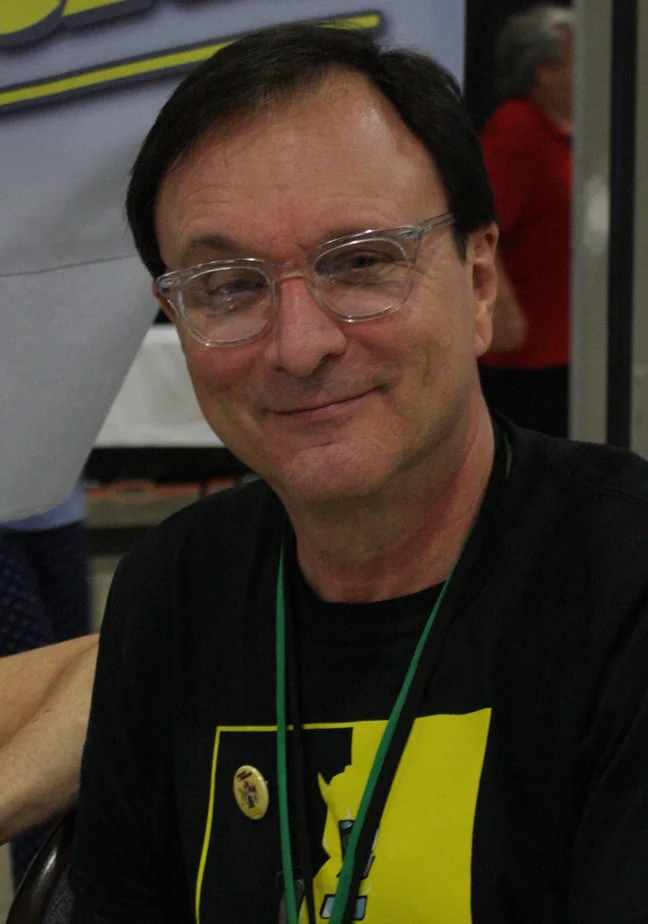
Dan Gilvezan, who voiced Bumblebee across the original series and the 1986 film, sat down with Peter Cullen over drinks at Le Petit Chateau in North Hollywood in February 2017, wrote the conversation up, and then never published it. On Monday, September 1, six days after Cullen’s death, he put it on his Instagram and on his own website as a nine page PDF that anyone can read or download for nothing. TFW2005 picked it up the following afternoon. Gilvezan posted it with nine words: “Rest well, my friend, you were one of a kind.”
We have read a lot of Peter Cullen interviews over the years, and the good ones are usually good because somebody had the sense to let him talk. This one is doing something else, and it takes a page or two to notice what. Gilvezan is not a reporter working through a list; he is a colleague who stood at the same microphones for the same show, and the questions he asks are the ones only another voice actor would think to ask.
The technical questions nobody else was asking
He wants to know whether Cullen approached Prime differently in the live action films than in the cartoon. The answer is a working actor’s answer rather than a fan-facing one: the voice did not change, the delivery did, because the cartoon ran on energy and action while the films had to become conversational enough for a forty five foot robot to talk to a six foot person. Gilvezan then pushes on the mechanics. Was the pitch itself altered? Cullen says the films ran his voice through processing to approximate the size of the character, adding a hollow metallic bottom end, and that on the last two they left him alone.
There is a smaller answer about session length that we had never seen anywhere. Two hours is about all he can manage, Cullen says, because he is giving them his low end the whole way through [1]. No convention stage ever got that out of him. It is one professional telling another what the work costs, and it exists because Gilvezan knew to ask.
The two of them also turn out to share a first credit in animation, both having started alongside Frank Welker, whom Cullen calls the king and rates above Mel Blanc. In 2017 that was a warm aside about a friend. Read it now, with Welker back as Megatron and Soundwave in Optimus Prime: Awakening, and it carries a good deal more.
The 1986 film, and the part that still stung
The hardest few pages in the PDF are about the film whose fortieth anniversary is in cinemas this month. Cullen tells Gilvezan that Sunbow knew what was coming and did not tell the cast, that he found out by reading the script, and that it was Welker who pointed at the page where Optimus Prime dies. He could easily have softened it thirty one years later, and he does not. Asked directly whether it bothered him, he says it did, and the reason he gives is not the death itself but that other people knew before he did.
There is decades of goodwill sitting on either side of that answer, yet he never once turns it on a person. The complaint is about how a decision was handled and it stops there. We tried to hold on to the same distinction in last week’s obituary.
Larry, again, but earlier
Everybody knows where Optimus Prime came from, because Cullen told that story for forty years and we retold it ourselves last week. What the interview adds is the part before the advice. He and his older brother Larry were thirteen months apart, Peter was six inches shorter, and at Saint Leo’s in Montreal the two of them boxed each other in a ring in front of a crowd, Irish kids set against French Canadian kids, mothers in the seats appalled [2]. Larry would lean in mid-round and warn him, quietly, that if he did that again he was going to get hurt. Peter would dance back and pop him on the nose anyway.
So the man Optimus Prime is built on was never an abstraction handed down as a maxim about being strong enough to be gentle. He was a brother who bled easily and never once used his reach.
The interview runs nine pages, it costs nothing, and it deserves reading whole rather than in pieces. The copyright line at the end reads 2017, so Gilvezan wrote this up, filed it, and kept it for nine years without getting a thing out of it. Then his friend died, and he decided the rest of us should have it.
[1] He means that literally. It is the physical cost of holding the bottom of his range for a session, and it is the sort of detail that never survives a press junket.
[2] The PDF carries a footnote of its own here, noting that Larry Cullen died of a heart attack on March 11, 2011, at the age of 70.
Sources
- Unpublished Interview With Peter Cullen From 2017 Available Online, TFW2005, September 2, 2026
- The Peter Cullen Interview, copyright 2017 Dan Gilvezan, published at dangilvezan.com
- Dan Gilvezan’s Instagram post, September 1, 2026
- Key art: Peter Cullen at the Kennedy Space Center, 2011, by Ryan Crierie, CC BY 2.0. Dan Gilvezan at Florida Supercon, 2013, by Super Festivals, CC BY 2.0.