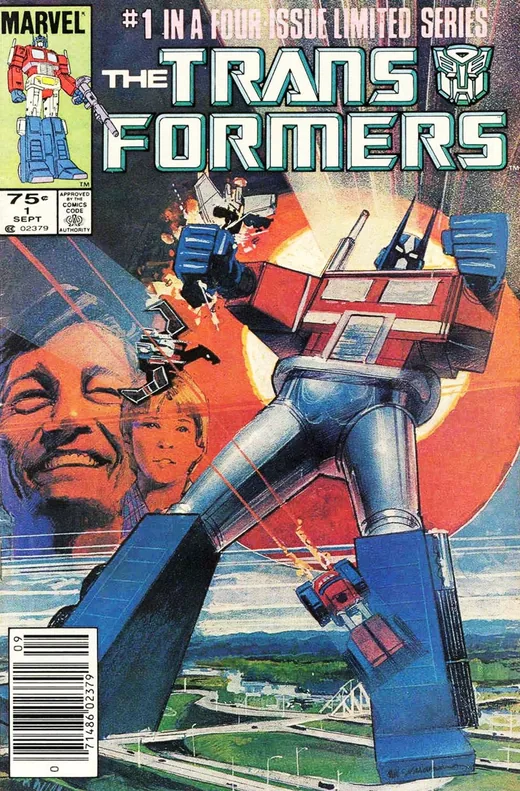
Comics / Marvel (US) / 1984-1991
The Transformers
The foundational run. Budiansky and Furman built a darker mythology than the cartoon: the Creation Matrix, the Underbase saga, a Megatron arc years deep.
The run
What it is
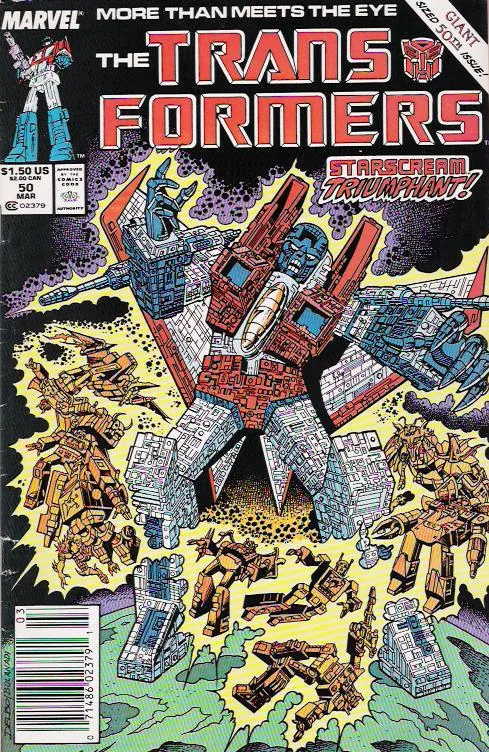
Marvel's The Transformers began in 1984 as a four-issue limited series commissioned to support a toy line nobody at Marvel expected much from. It sold well enough that issue 4's cliffhanger, Shockwave hanging the dismantled Autobots from the Ark's ceiling, became the launch pad for an ongoing that ran another seventy-six issues to July 1991. Along the way it invented almost everything the franchise now treats as canon: the Ark, the Matrix, Primus and Unicron as opposed gods, and the character bios on the back of the toy packaging, which Bob Budiansky wrote for Hasbro before he ever wrote the comic.,The tone is the thing people remember. Where the cartoon was a half-hour toy commercial with no consequences, the comic killed characters and left them dead, gave humans real agency and real damage, and treated the war as a grinding four-million-year attrition rather than a weekly skirmish. Optimus Prime died in issue 24 and stayed dead for eighteen issues. Issue 50 wiped out most of the cast in a single night. Cybertron was not a shining home world waiting to be liberated but a rusting ruin run by warlords who fed prisoners into smelting pools.,It is well regarded because it did serious science fiction inside a mandate that changed every three months. Hasbro dictated which toys had to appear and when, and the writers had to build stories around a cast that was continually being replaced. Budiansky's answer was character work and human perspective; Furman's was myth and scale. The book has been reprinted continuously since, most recently in Skybound's Compendium collections, and the 2012 Regeneration One series picked up directly from issue 80 as though the intervening twenty-one years had not happened.
Storylines
Major arcs
| Name | Issues | What it is |
|---|---|---|
| The Creation Matrix and Shockwave's coup | 4-12 | Shockwave deposes Megatron, dismantles the Autobots and hunts the Creation Matrix inside Optimus Prime, who hides it in the mind of a teenage human. The arc that established the Matrix as a tool for creating life rather than a badge of office. |
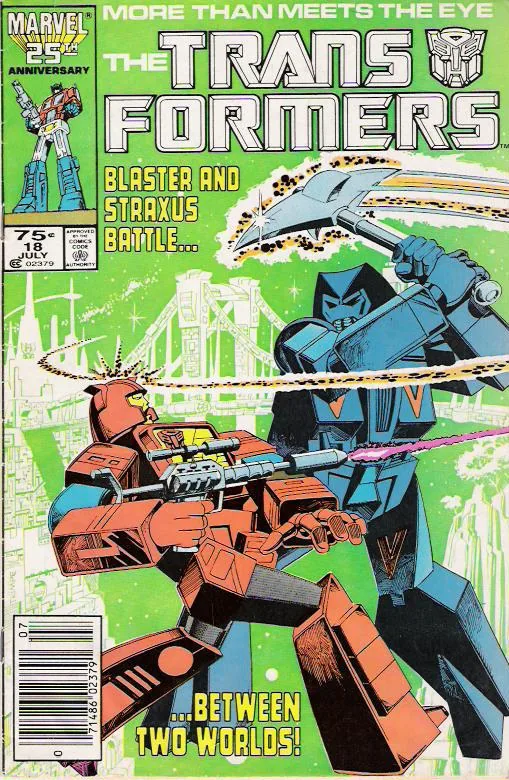
| Cybertron, Darkmount and the space bridge | 17-21 | Blaster, Perceptor and the Cybertronian resistance against Lord High Governor Straxus, culminating in the destruction of Darkmount's space bridge and the permanent linking of the Earth and Cybertron storylines. |
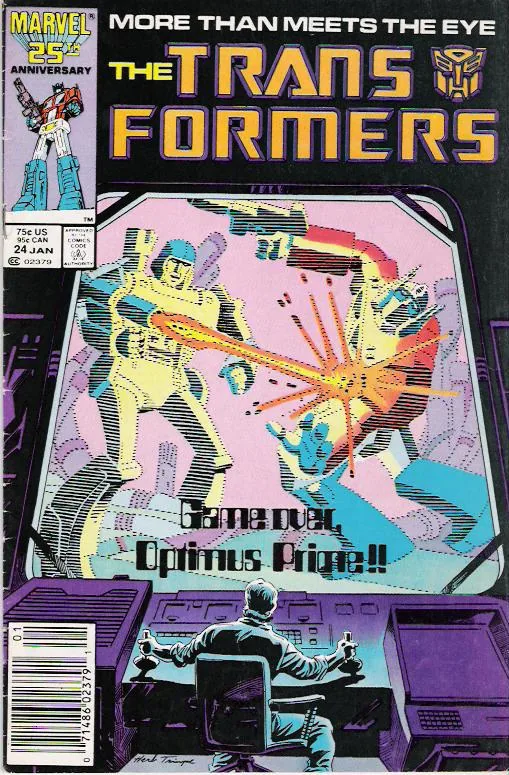
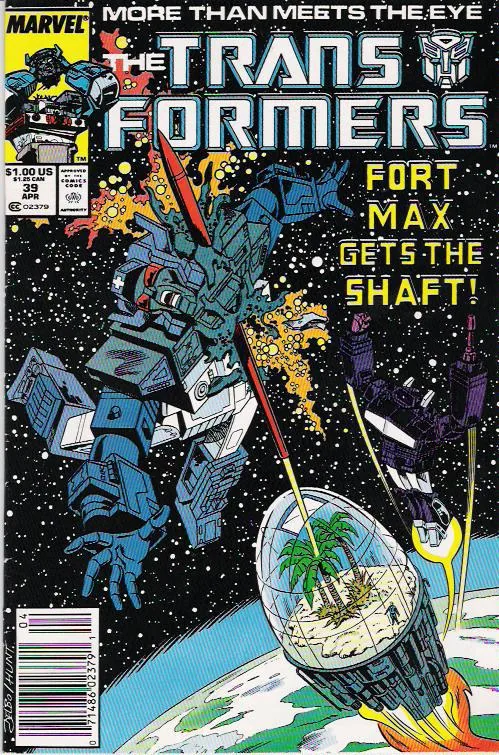
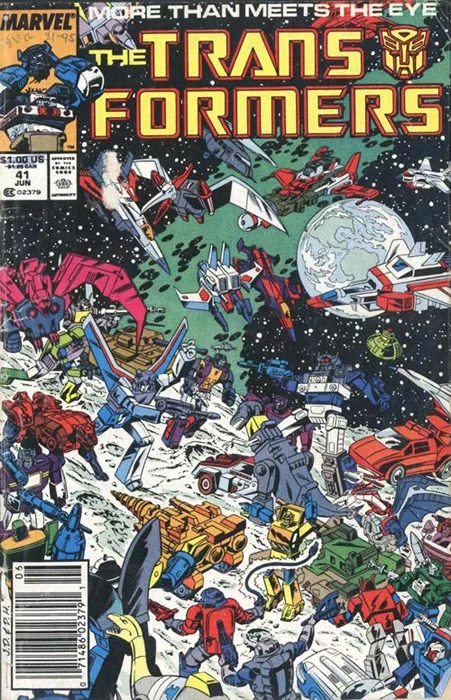
| The death of Optimus Prime and the Grimlock era | 24-41 | Optimus dies over a point of honour in a video game, Megatron destroys himself, Grimlock seizes command, and Blaster's desertion splits the Autobots into a civil war that only ends when the two rivals fight side by side on the Moon. |
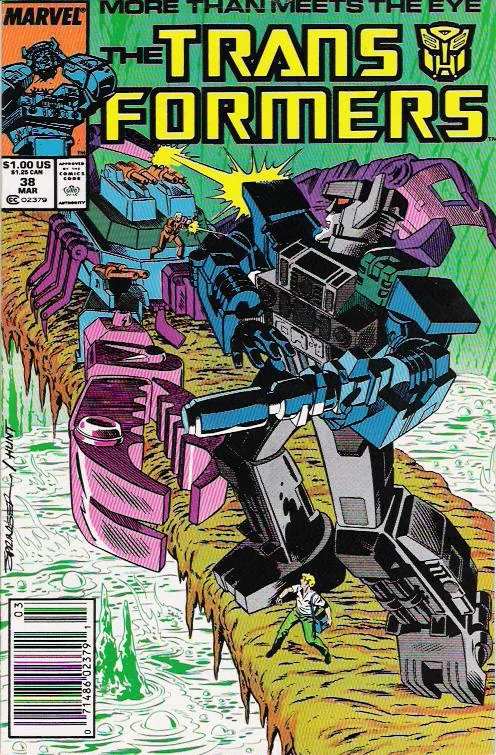
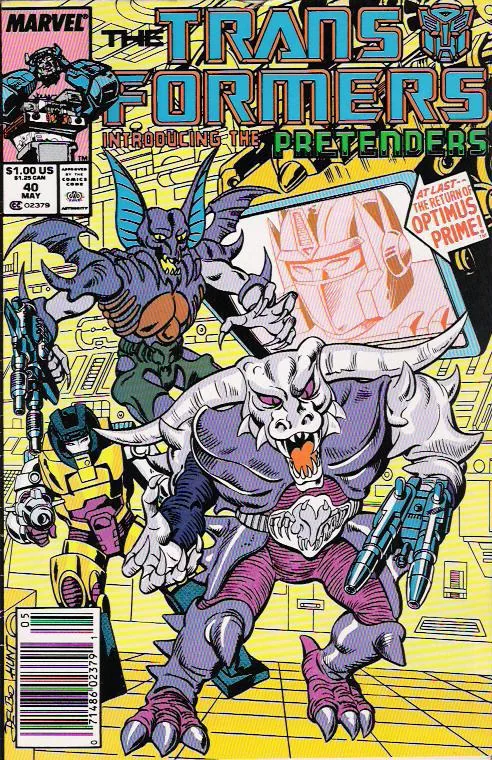
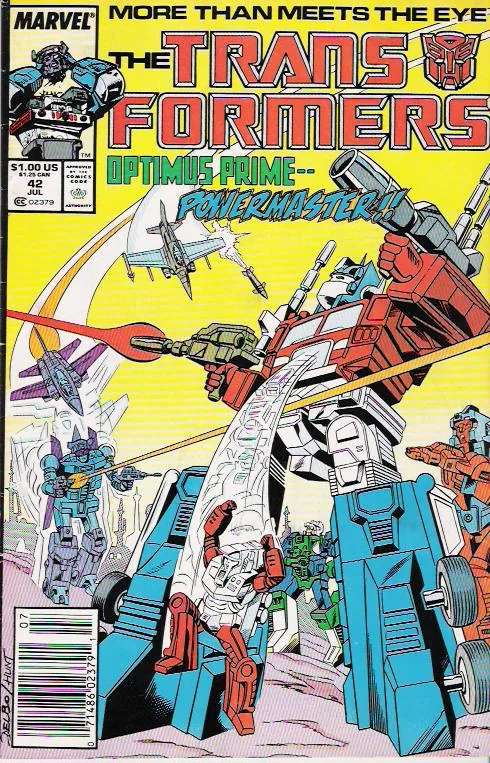
| Return to life: Headmasters, Pretenders and Powermasters | 38-42 | Spike Witwicky becomes Fortress Maximus, Scorponok arrives on Earth, and Optimus Prime is rebuilt from a copy of his mind on a floppy disk into a Powermaster binary-bonded to the Nebulan Hi-Q, a bond that turns out to matter enormously in issue 80. |
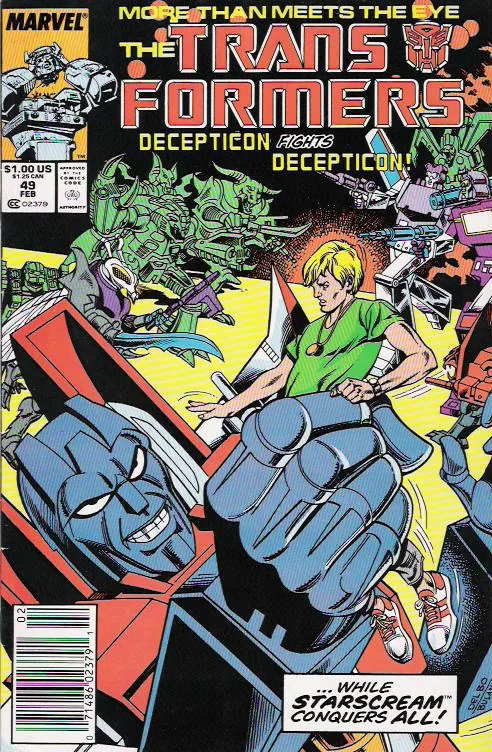
| The Underbase Saga | 47-50 | Starscream absorbs a fraction of the Underbase, the sum of all Cybertronian knowledge, and in issue 50 slaughters nearly every unbonded Autobot and Decepticon on Earth before the full download destroys him. The most famous storyline of the run and the bluntest example of the book clearing out discontinued toys. |
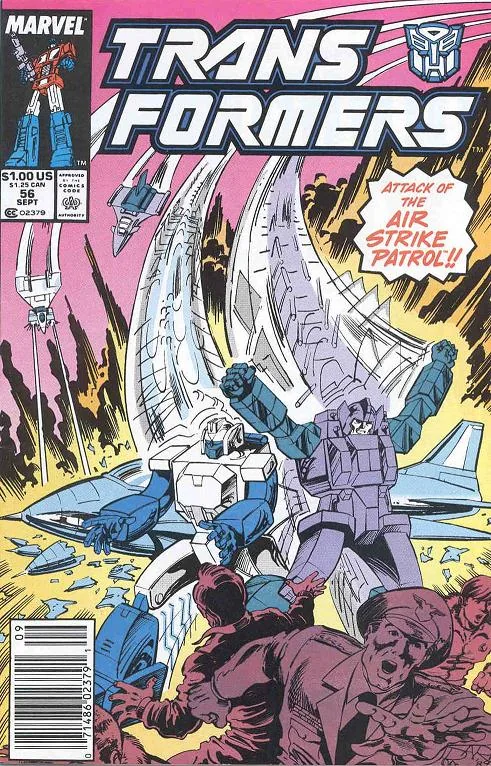
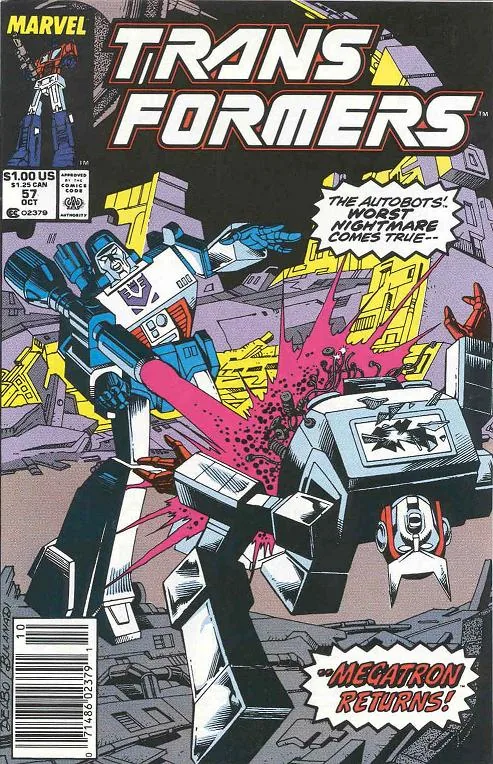
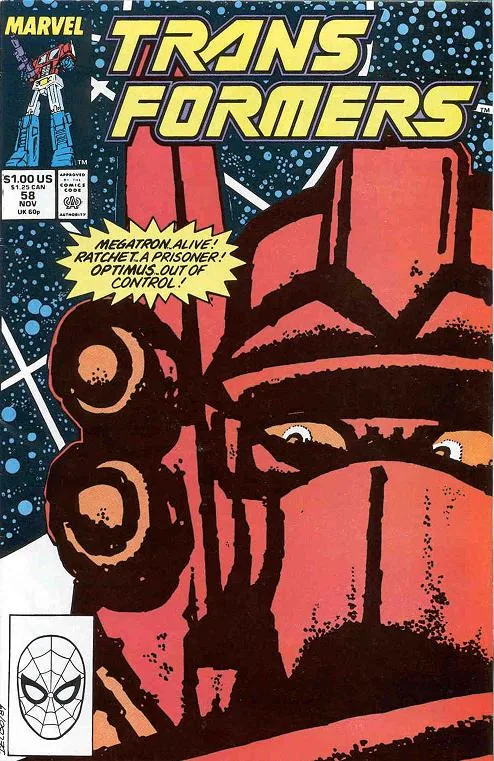
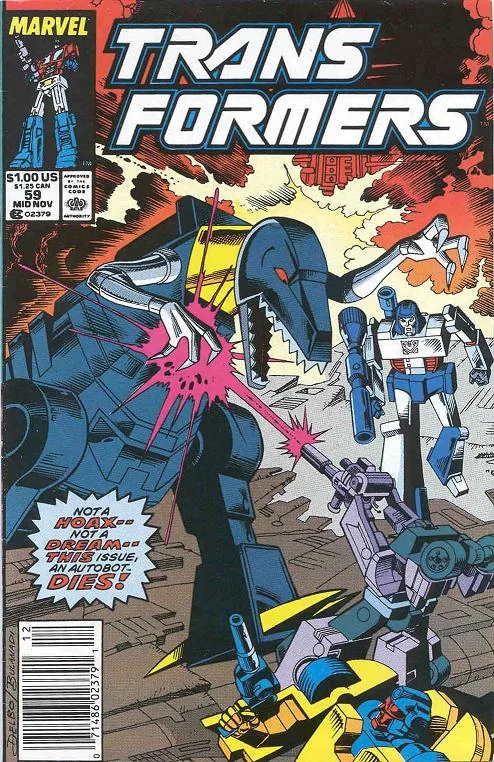
| The return of Megatron | 56-59 | Furman's opening arc: Megatron, alive and unstable, blackmails Ratchet into building a Pretender shell for Starscream, ending with Ratchet's apparent self-sacrifice. |
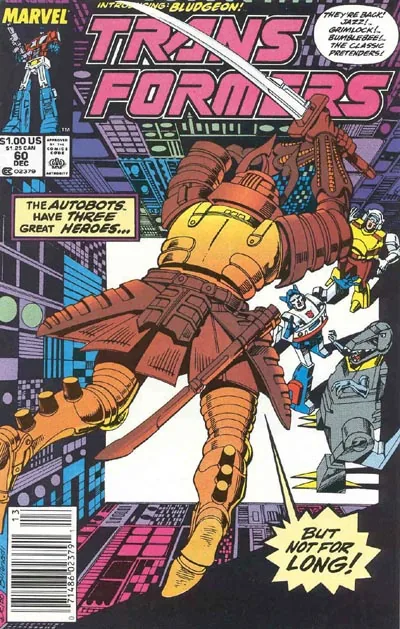
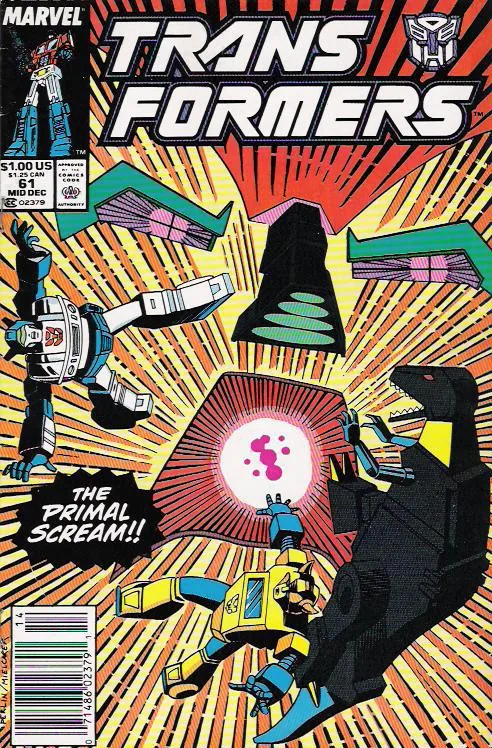
| Primus, Unicron and the Primal Scream | 60-61 | The Keeper's account of the twin gods, Primus creating the Transformers as his proxies against Unicron. This is where the franchise's entire creation myth comes from; it was later absorbed into virtually every subsequent continuity. |
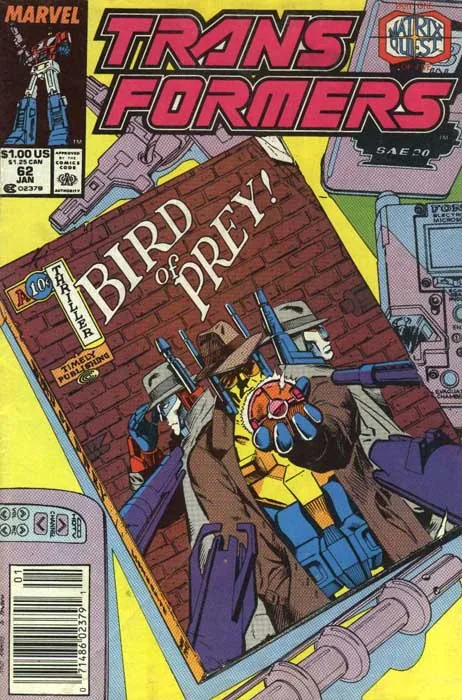
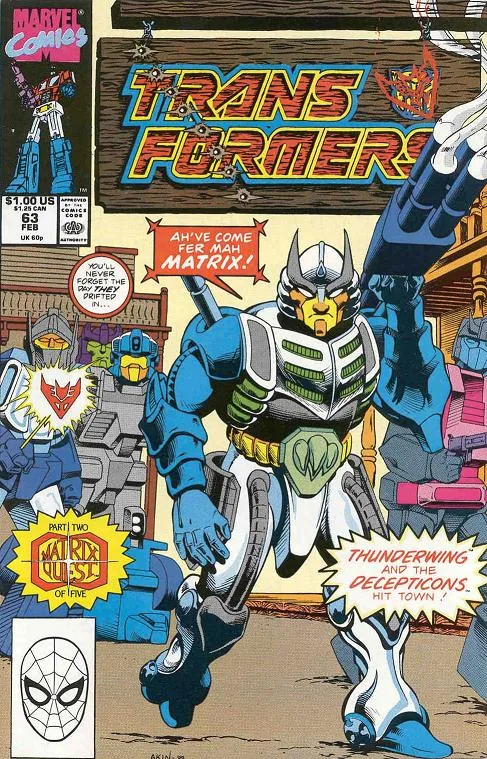
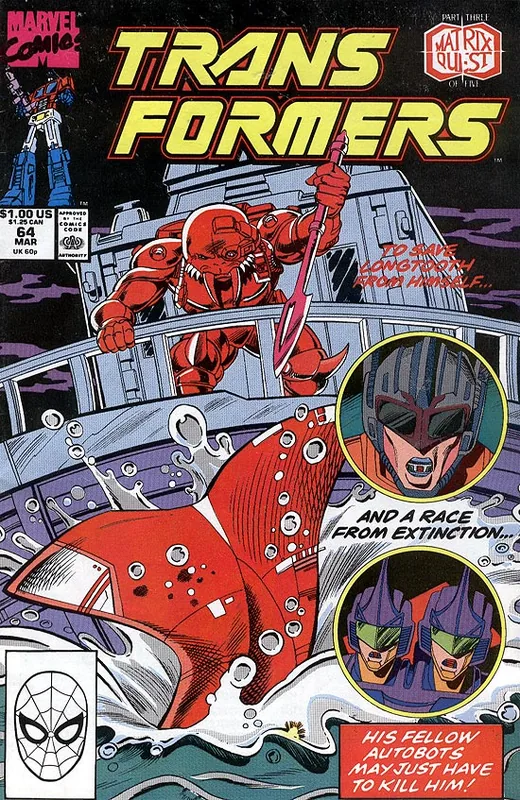
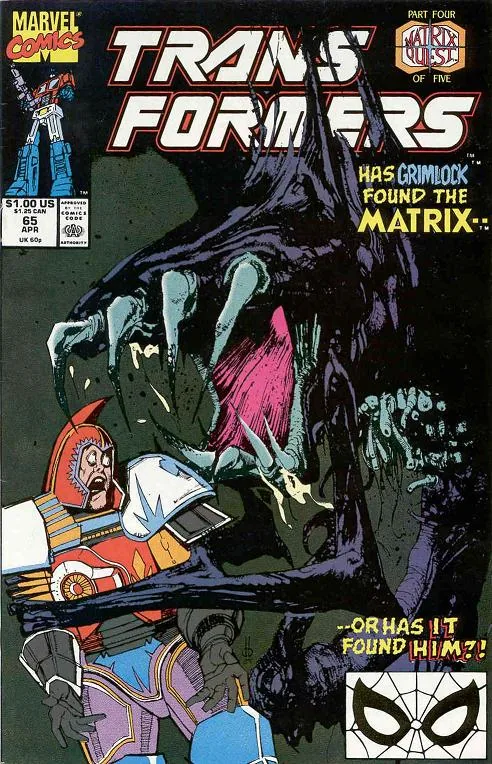
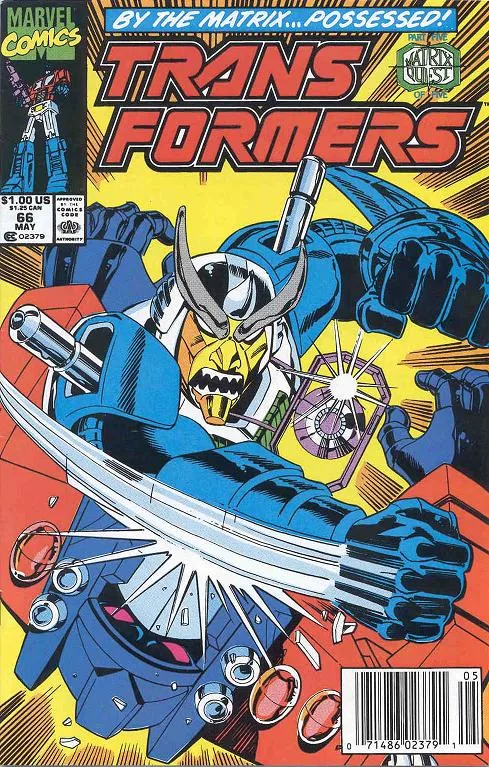
| The Matrix Quest | 62-66 | Autobot teams scatter across the galaxy hunting the lost Creation Matrix, each issue a self-contained genre pastiche, while the Matrix itself learns cruelty on the moon VsQs. It ends with Thunderwing seizing it, being consumed by it, and both being blown into space. |
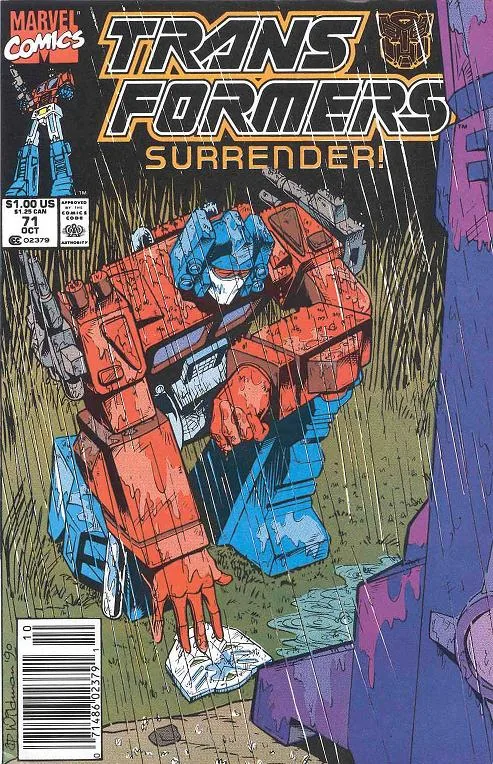
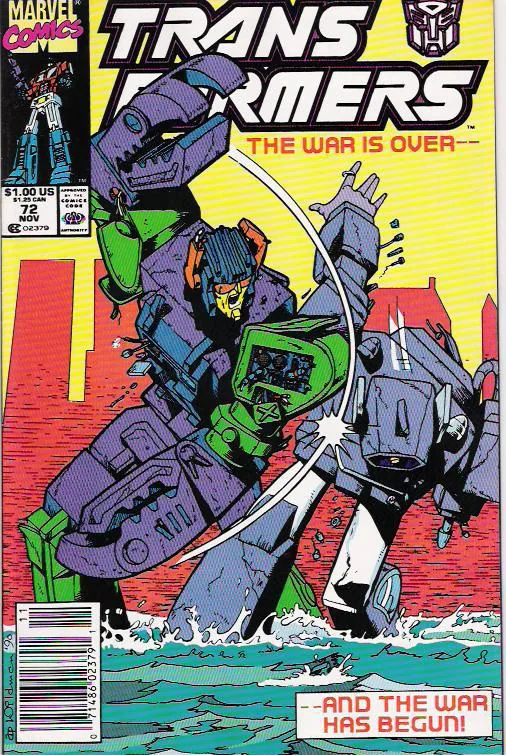
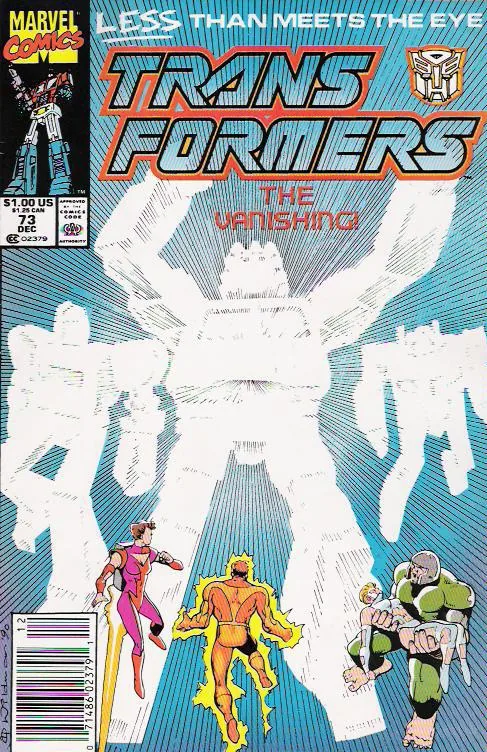
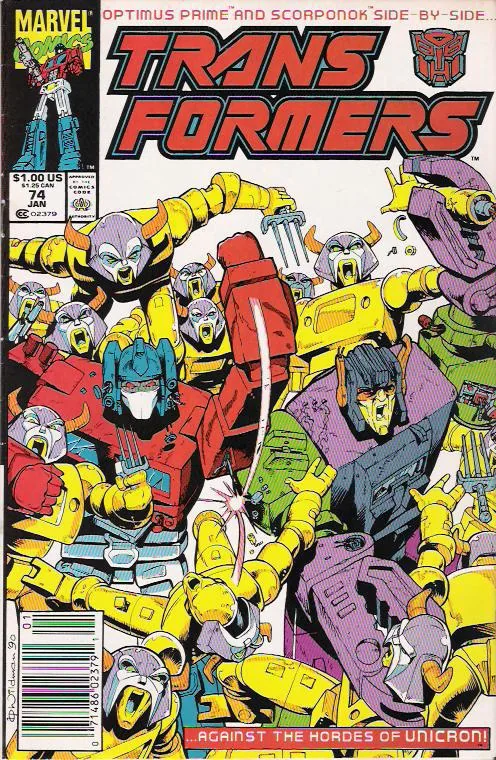
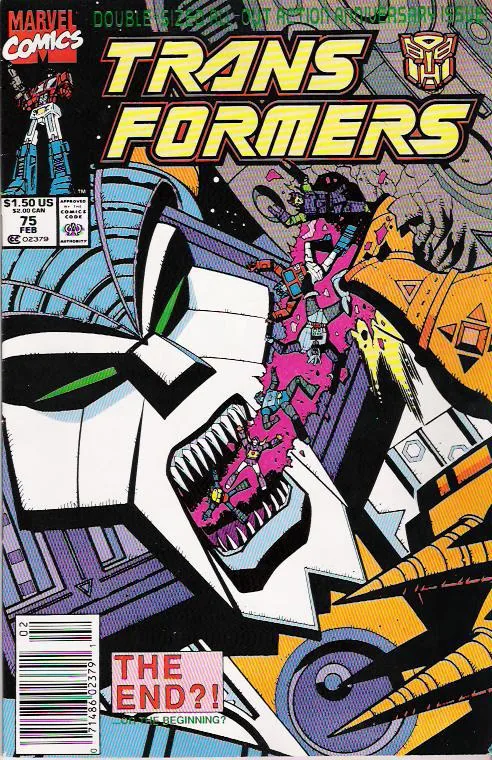
| Alliance and the arrival of Unicron | 69-75 | Optimus offers unconditional surrender to build an Autobot-Decepticon alliance, a second Decepticon civil war nearly wrecks it, Primus is awakened in Xaaron's body, and Unicron attacks Cybertron. Issue 75 ends with Optimus destroying both gods at the cost of his own life. |
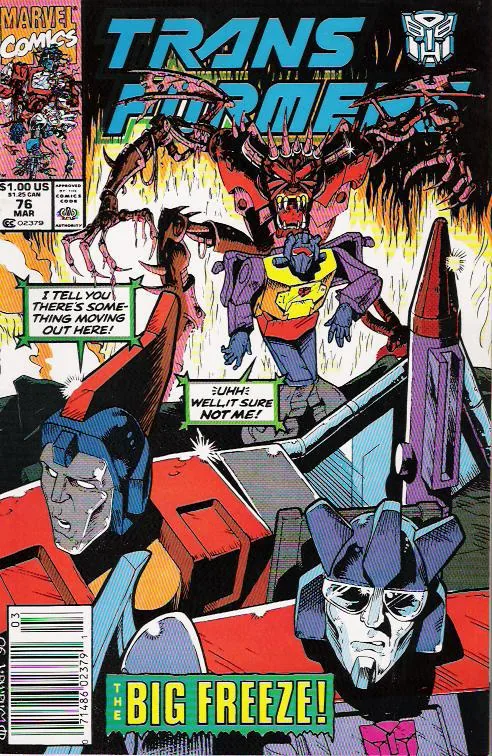
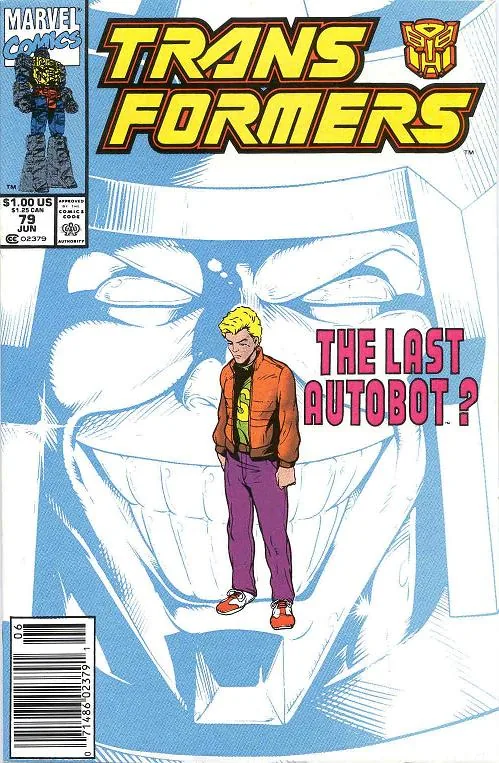
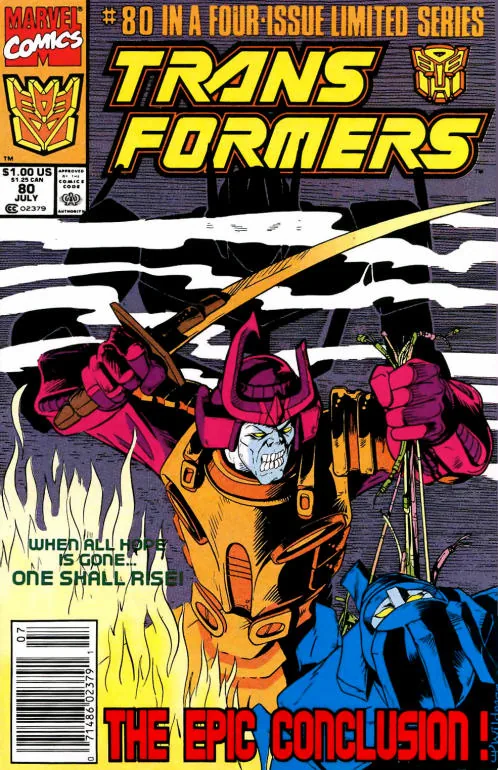
| Exodus and the Last Autobot | 76-80 | Cybertron dies without Primus, the survivors flee, Grimlock leads badly, and Bludgeon hunts the remnants until Hi-Q, reformatted by the Last Autobot into a new Optimus Prime, ends the war. |
Collecting
The issues that matter
| Issue | Why |
|---|---|
| #1 | The first Transformers comic ever published and the origin of the entire franchise's fiction. |
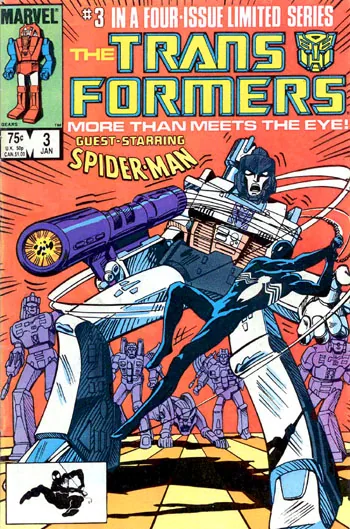
| #3 | Spider-Man crossover, the first proof the Transformers shared the Marvel Universe. |
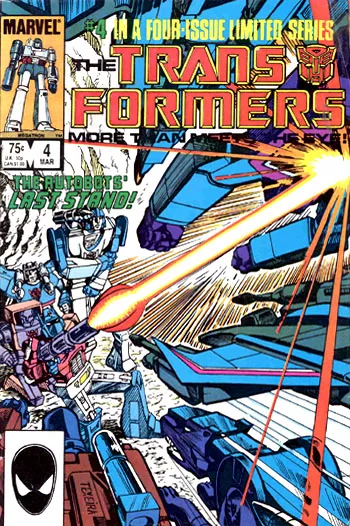
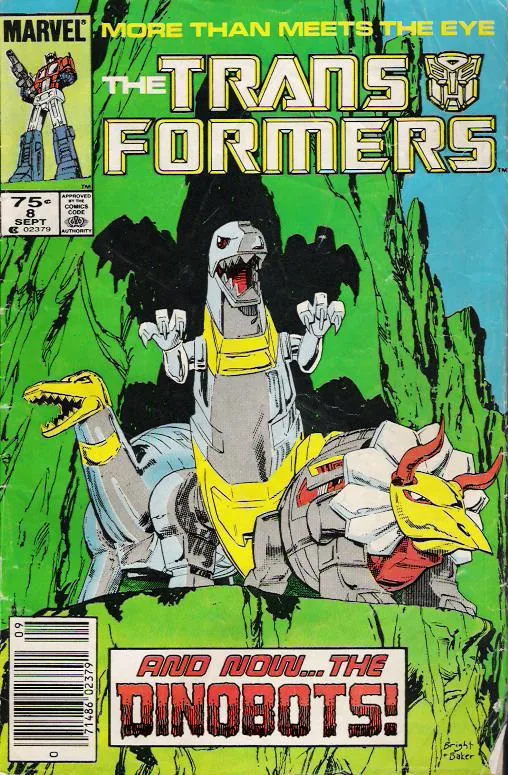
| #4 | First appearance of Shockwave and the Dinobots, and the cliffhanger that turned a miniseries into an ongoing. |
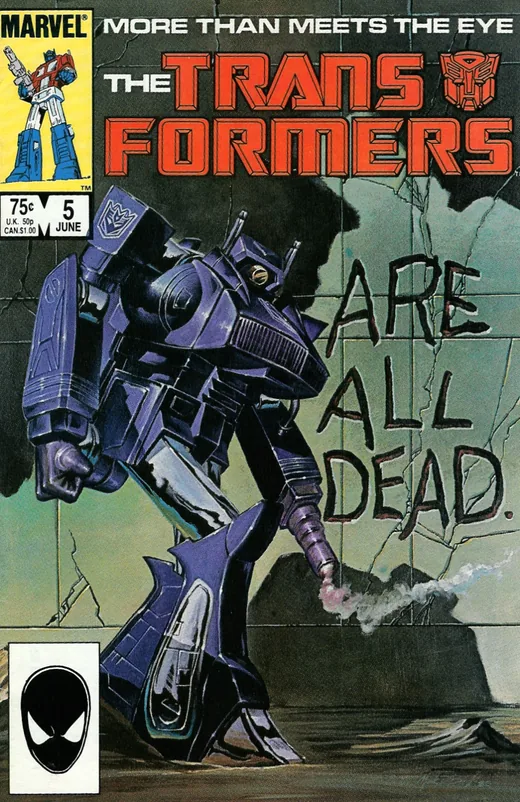
| #5 | Debut of the Creation Matrix, the concept that most separates Marvel's mythology from the cartoon's. |
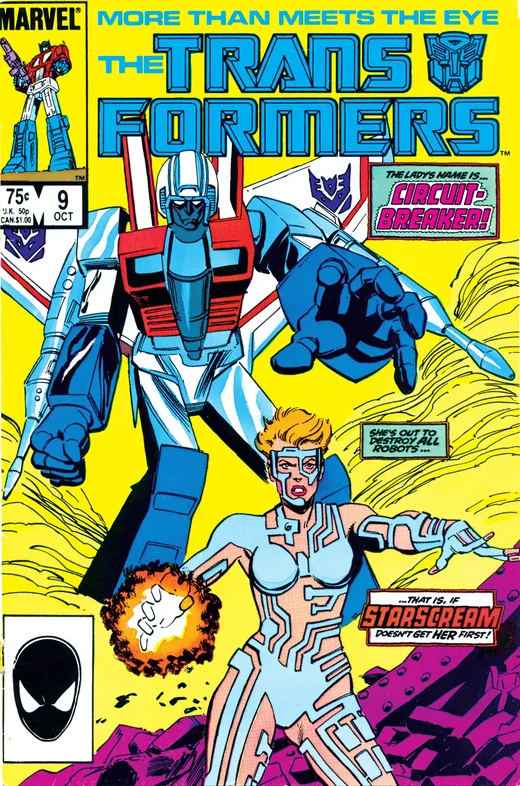
| #9 | First appearance of Circuit Breaker, the run's signature human antagonist. |
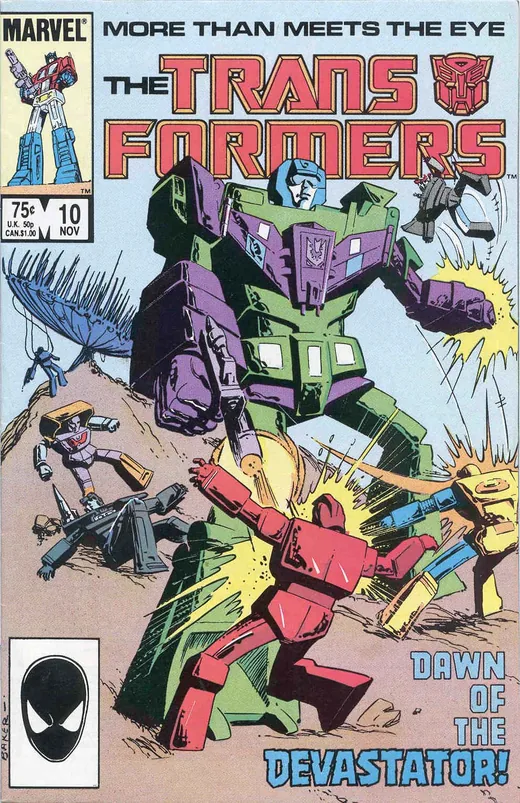
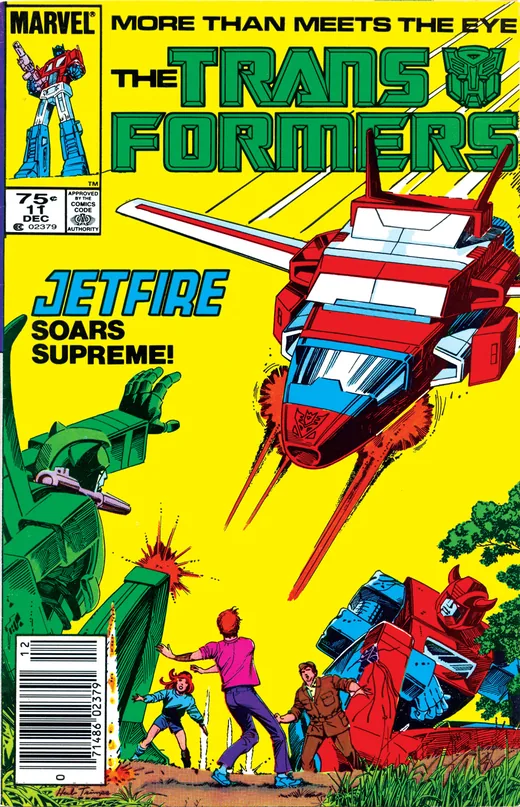
| #10 | First appearance of the Constructicons, Devastator and Jetfire. |
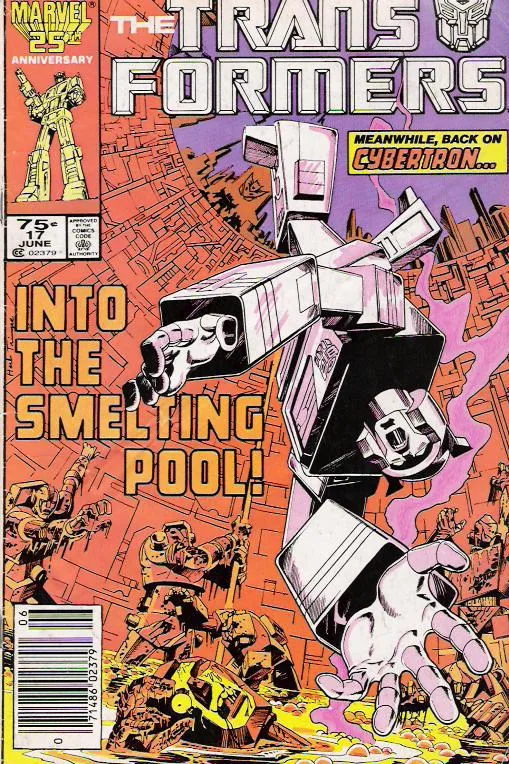
| #17 | Opens the Cybertron storyline and introduces Blaster, Perceptor and Straxus in the run's grimmest issue. |
| #24 | The death of Optimus Prime, years before the cartoon dared it. |
| #27 | Grimlock takes the Autobot leadership and Ratbat debuts. |
| #38 | Spike Witwicky becomes Fortress Maximus; Scorponok and the Headmasters enter the main title. |
| #50 | The Underbase massacre, the most notorious issue of the run and the death of Starscream. |
| #56 | Simon Furman's first issue and the return of Megatron. |
| #61 | The Primus and Unicron creation myth, adopted franchise-wide ever since. |
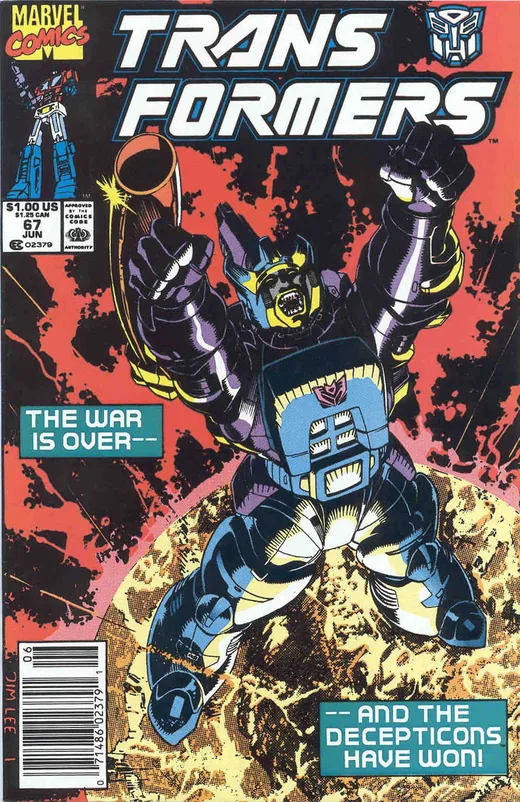
| #67 | Rhythms of Darkness, the dystopian standalone routinely named the best single issue of the run. |
| #75 | Double-sized Unicron climax and the second death of Optimus Prime. |
| #80 | The final issue, and the exact point Regeneration One resumed from twenty-one years later. |
Who made it
Creators
| Bob Budiansky | Effectively the architect of the Transformers universe. He wrote the original Hasbro character bios, then built the comic's world around them: the Creation Matrix, Shockwave's coup, Circuit Breaker and G.B. Blackrock, Ratbat, the Underbase Saga. His later issues are widely regarded as burnt-out, and he himself proposed Simon Furman as his replacement. |
| Simon Furman | Came over from Marvel UK, where he had been writing Transformers for years, and shifted the book from episodic toy-driven plots to sustained myth: the Primus and Unicron creation story, the Matrix Quest, Thunderwing's corruption, and the Unicron endgame. His run is the one most fans mean when they call the Marvel book great. |
| Bill Mantlo, Ralph Macchio and Jim Salicrup | Mantlo plotted issues 1 and 2; Macchio scripted 1 and later wrote the standalone movie-continuity issue 43; Salicrup scripted 2, 3 and 4, including the Spider-Man crossover. |
| Frank Springer | Defined the visual language of the first Transformers comic ever published. |
| Don Perlin | The house artist of the middle Budiansky era, drawing the Cybertron flashbacks, the Aerialbots, the death of Optimus Prime and Grimlock's rise. |
| José Delbo | The longest-serving artist on the book, drawing the Underbase Saga including issue 50, the arrival of the Headmasters and Pretenders, and Furman's opening arc. |
| Geoff Senior | Brought over from Marvel UK for the big set pieces. He drew The Primal Scream, the corruption of the Matrix and the Unicron battle in issue 75, and his energetic, heavily rendered figures are the visual signature of the run's climax. |
| Andrew Wildman | Closed the series out, giving the final two years their distinctive angular, expressive style. He returned to draw Regeneration One two decades later. |
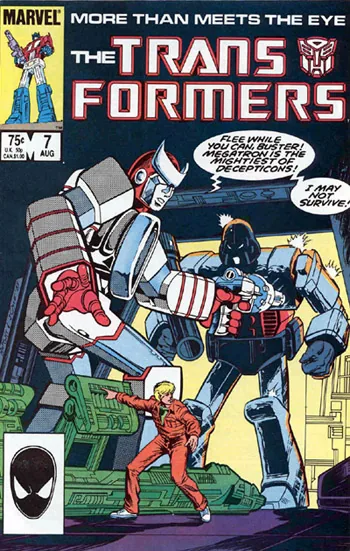
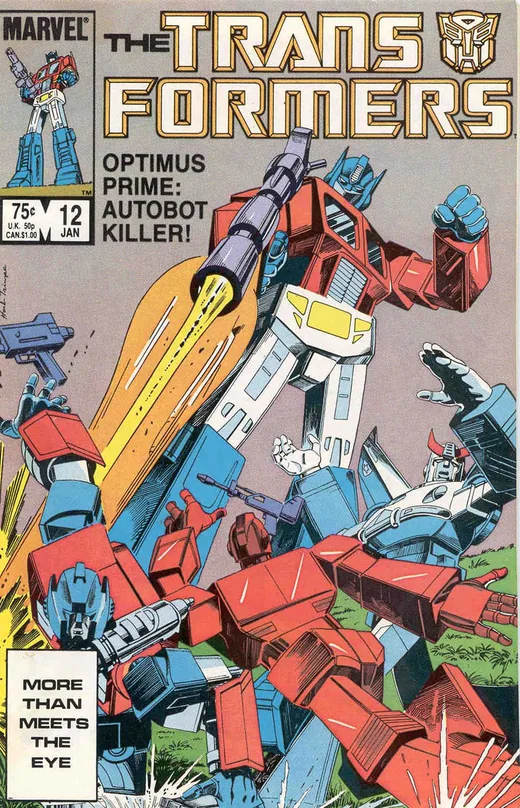
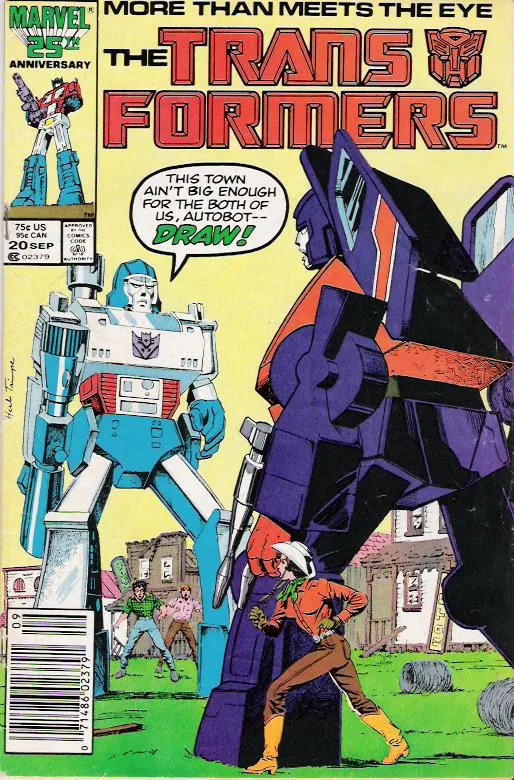
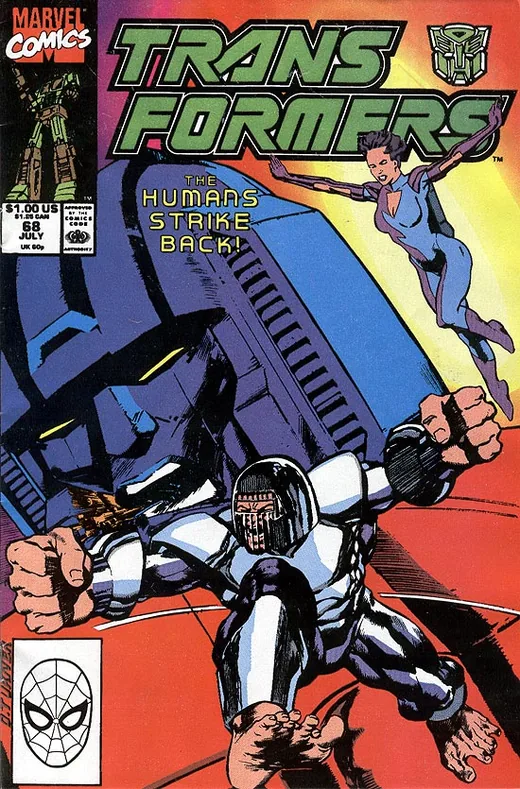
| Herb Trimpe, Alan Kupperberg, William Johnson, Mike Manley, Ricardo Villamonte, Graham Nolan, Dwayne Turner | Kupperberg drew issues 5, 6 and 43; Trimpe 11, 12 and 20; Johnson 7 and 8; Manley 9; Villamonte 10; Nolan 16; Turner 68. |
| Nel Yomtov | Coloured every single issue of the run plus all the related miniseries, giving seven years of rotating pencillers a consistent look. |
| Notable inkers | Kyle Baker (7-8), Tom Palmer (11), Vince Colletta (18), the Ian Akin and Brian Garvey team (much of 19-37), Dave Hunt (38-63 in stretches), Al Williamson (64), and Stephen Baskerville, who inked Wildman on 70-74 and 76-80. |
Continuity
Comics versus cartoon
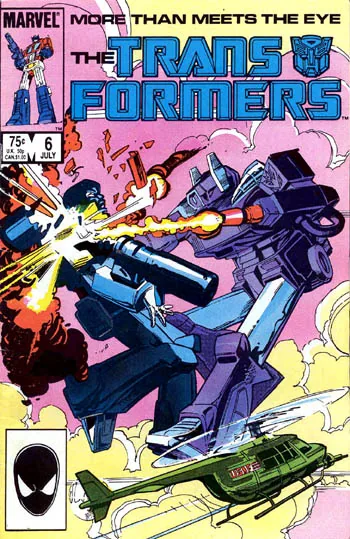
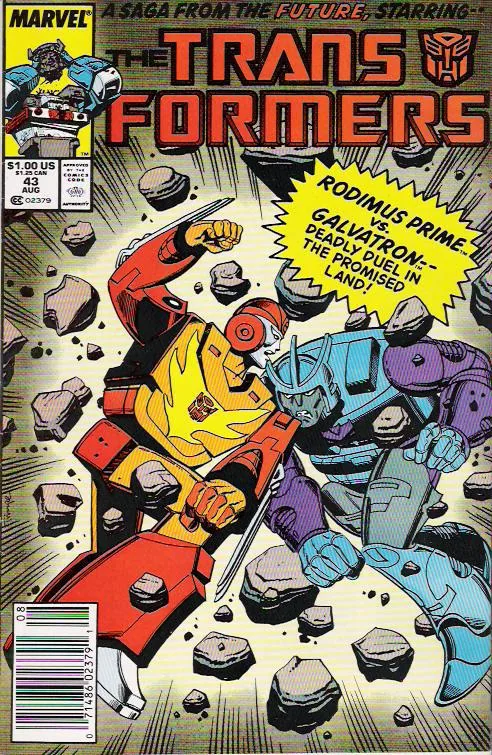
The two versions diverge almost immediately and almost completely. In the comic, Megatron is deposed by Shockwave in issue 6 and spends long stretches missing, insane or dead, whereas the cartoon's Megatron is a fixture. The Matrix is not the Matrix of Leadership, a symbol handed from Prime to Prime; it is the Creation Matrix, a power source that literally animates new Transformers, which is why Shockwave wants it and why Optimus can hide it inside a teenager's head. Cybertron is not a besieged home world but a rusted ruin run by warlords like Straxus, who executes prisoners in smelting pools. The Quintessons, central to the cartoon's third season, appear exactly once in the US book, in the one-off issue 43, and have no bearing on the main continuity. Unicron's origin is entirely different too: rather than an ancient planet-eater, he is one of two brother gods, and Primus created the Transformers specifically as weapons against him, a mythology the comic invented in issue 61 and the wider franchise later adopted.,The humans are the other big difference. The cartoon's Spike and Sparkplug are sidekicks; the comic's Buster Witwicky carries the Creation Matrix, Sparkplug poisons the entire Decepticon army, G.B. Blackrock is an industrialist whose assets keep being seized, and Josie Beller becomes Circuit Breaker, a genuinely dangerous anti-robot vigilante who maims Autobots and cannot tell the factions apart. RAAT is a government task force that dissects captured Autobots. Deaths stick: Optimus dies in issue 24, Ratbat and Starscream in issue 50, Scorponok and Optimus again in issue 75, and issue 50 kills off most of the supporting cast in one night. Characters the cartoon never had, Ratbat the Decepticon fuel auditor, Nightbeat the detective, Thunderwing, Bludgeon and the Mayhem Attack Squad, are among the most fondly remembered in the book. The reverse is also true: Marvel US has no Rodimus Prime era, no Autobot City, and no post-movie 2006 setting outside issue 43 and the alternate future of issue 67.
The long box
Every issue we hold
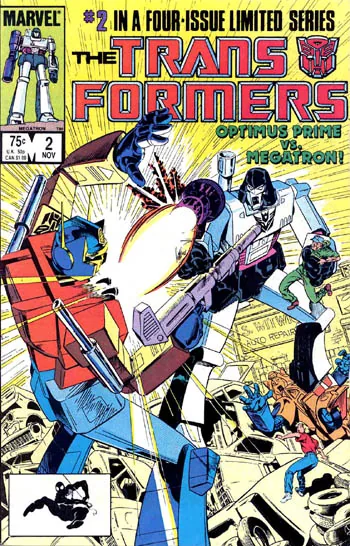
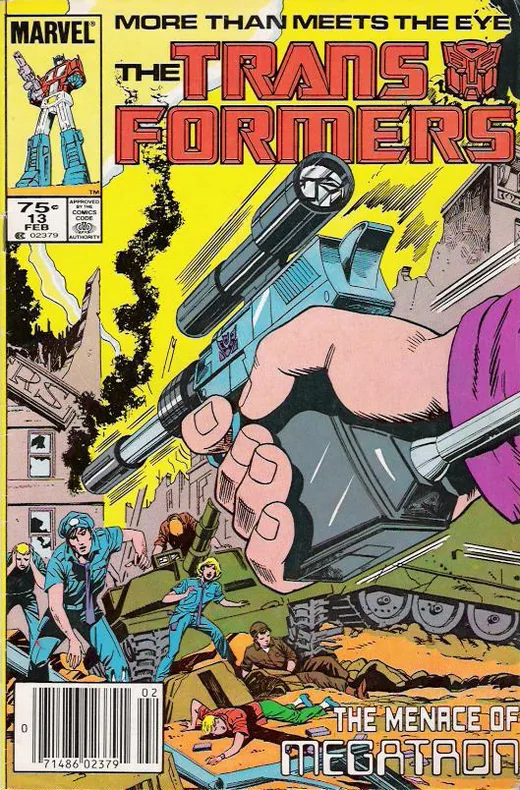
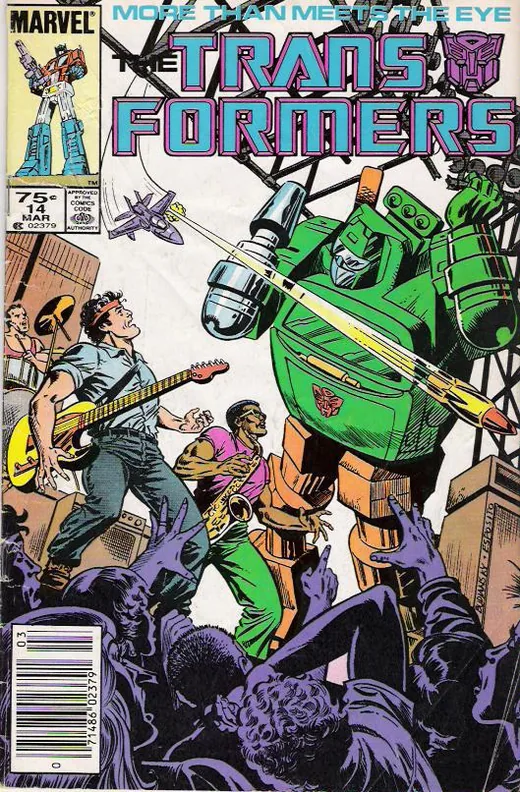
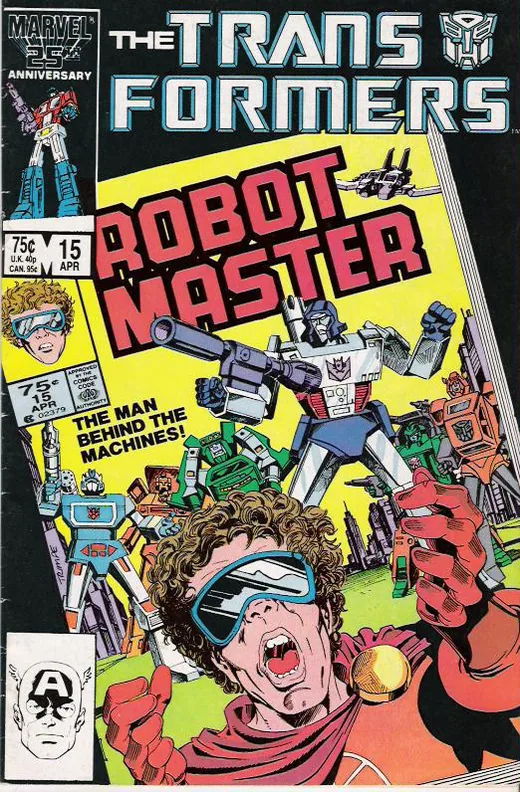
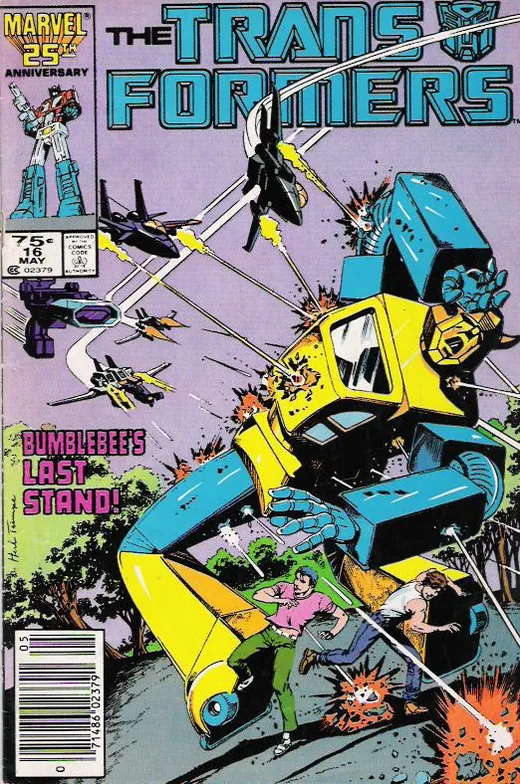
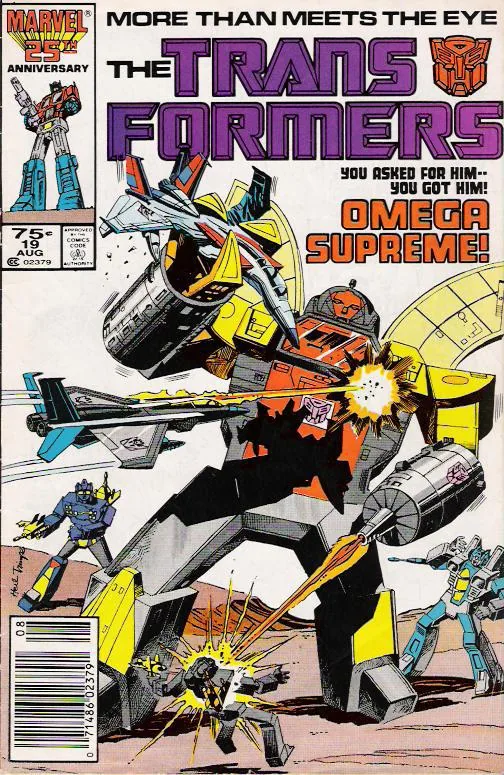
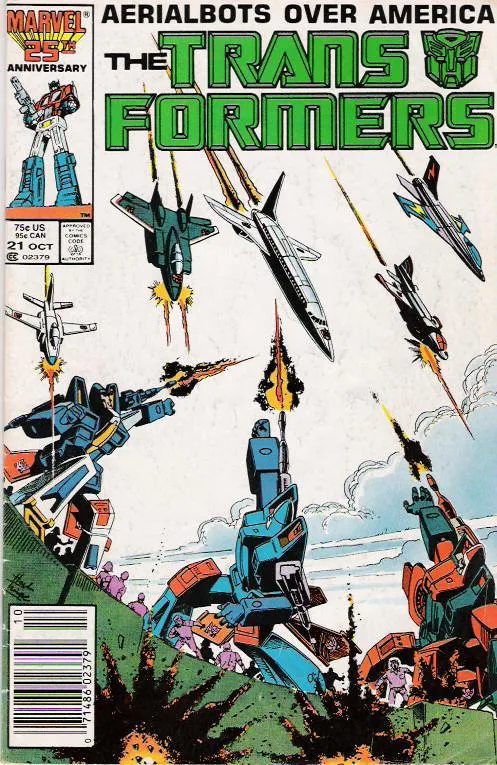
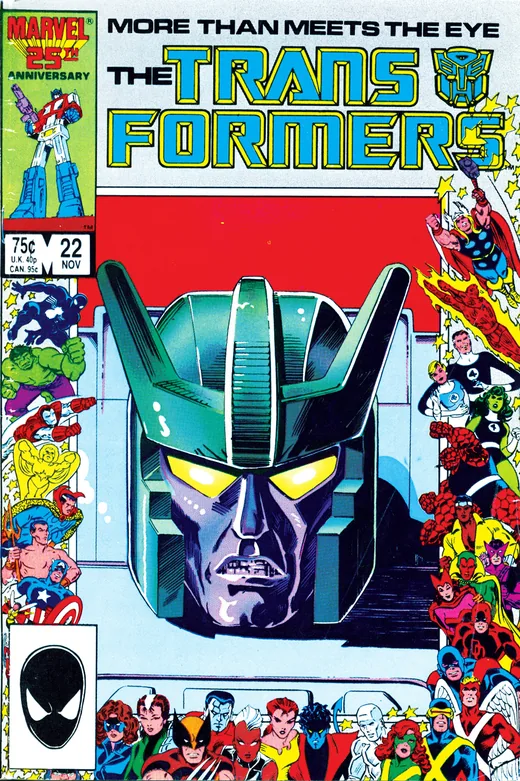
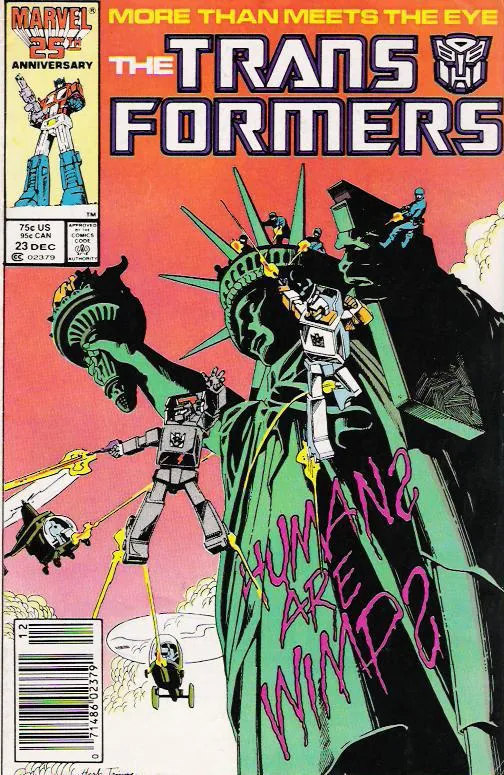
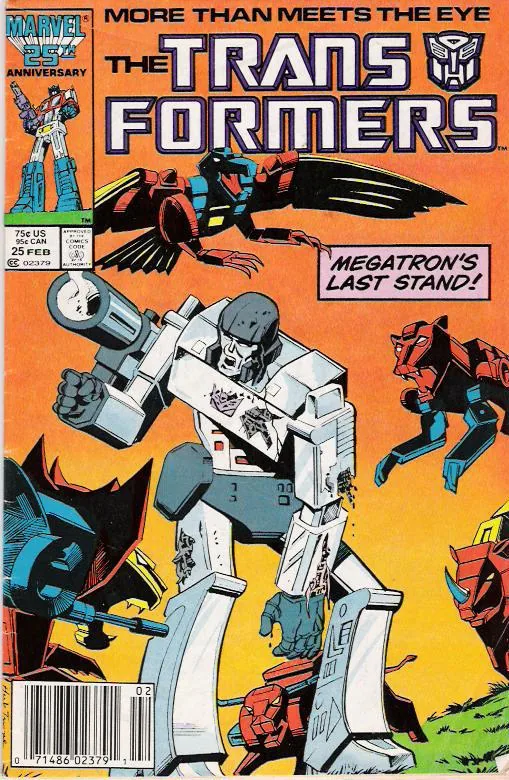
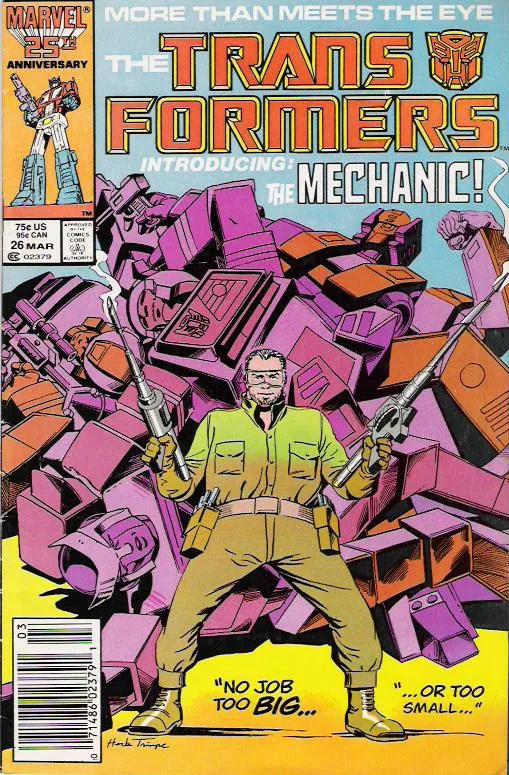
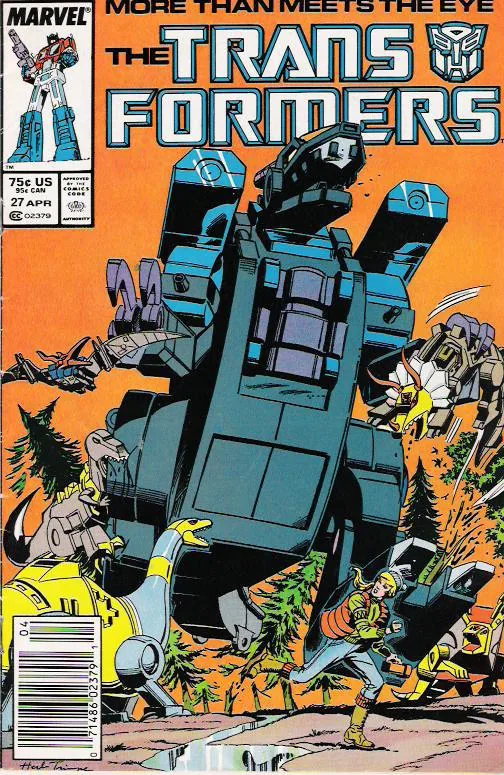
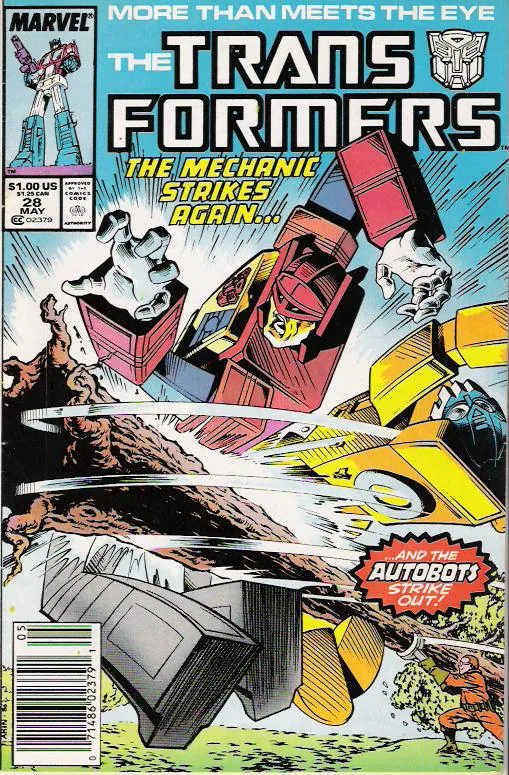
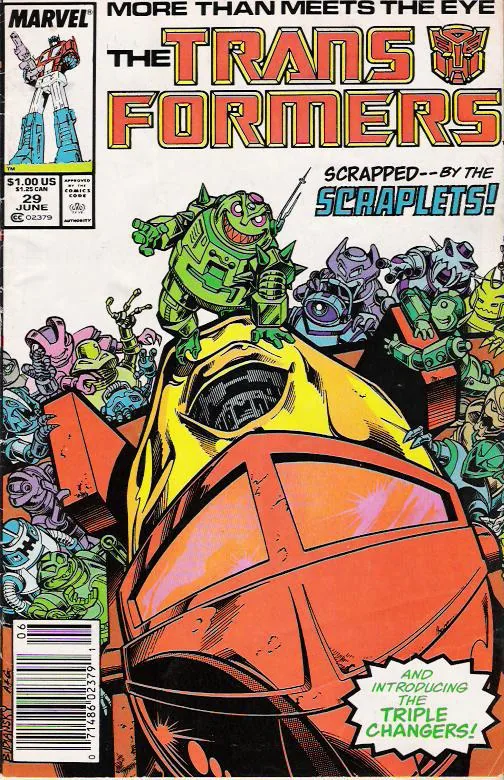
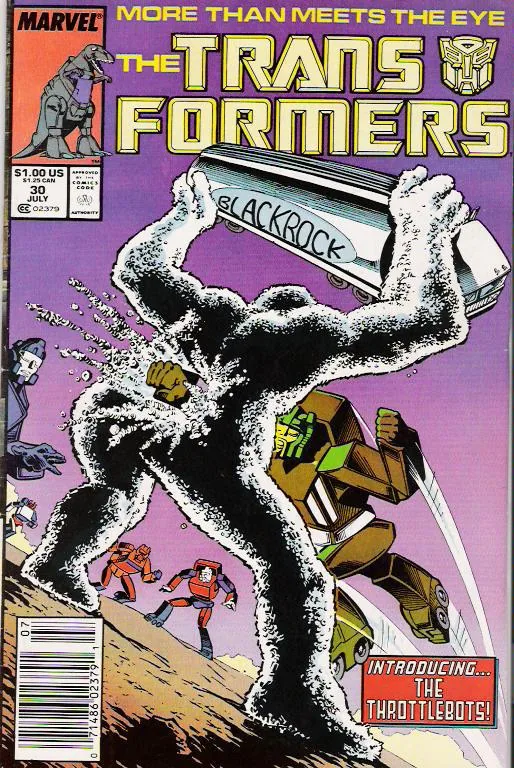
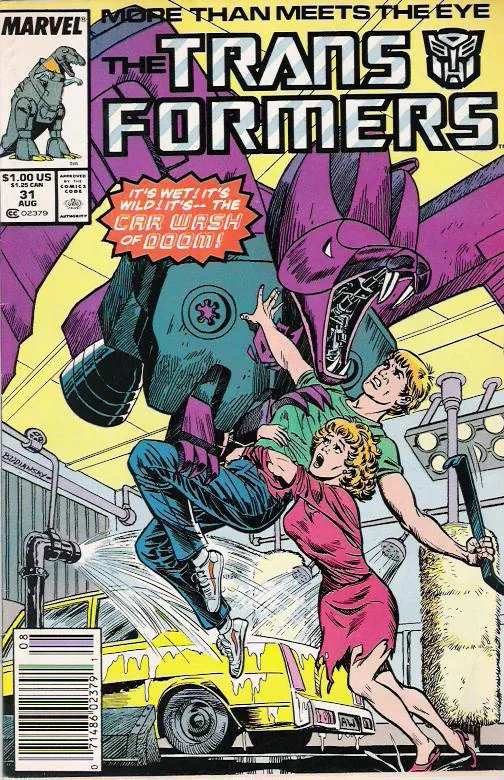
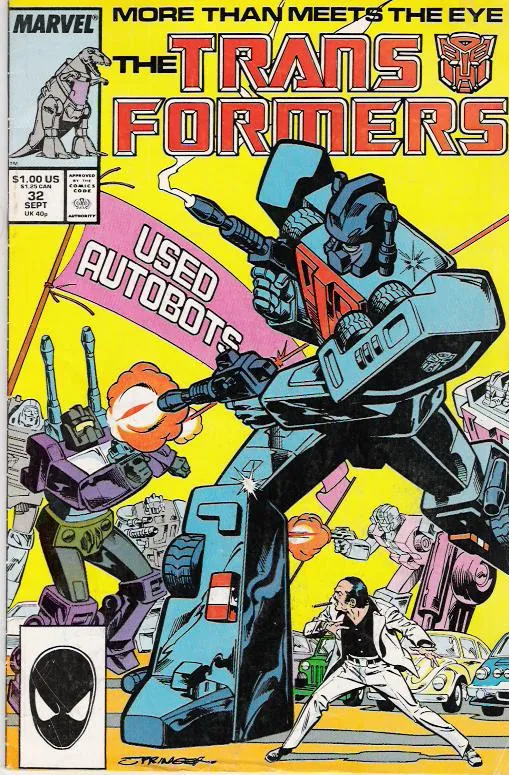
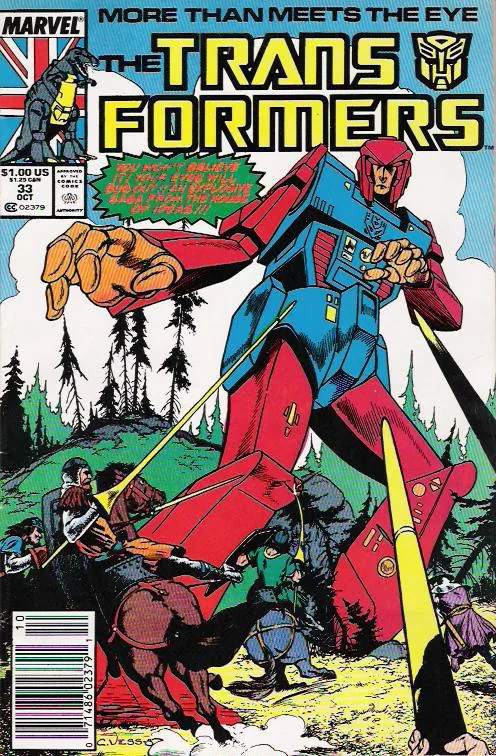
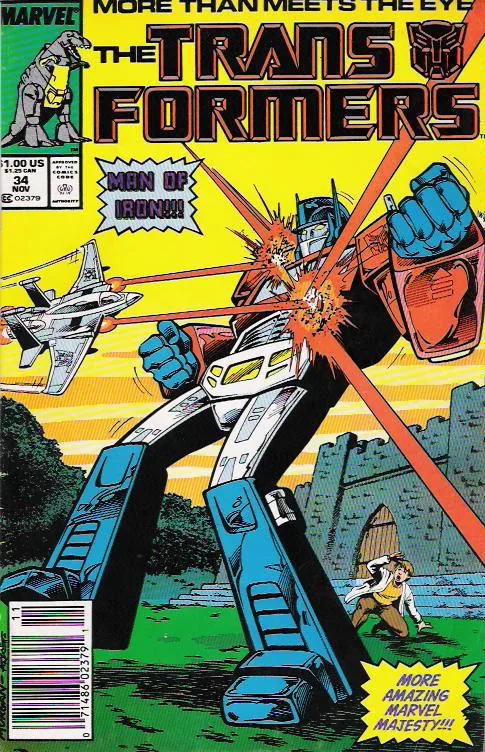
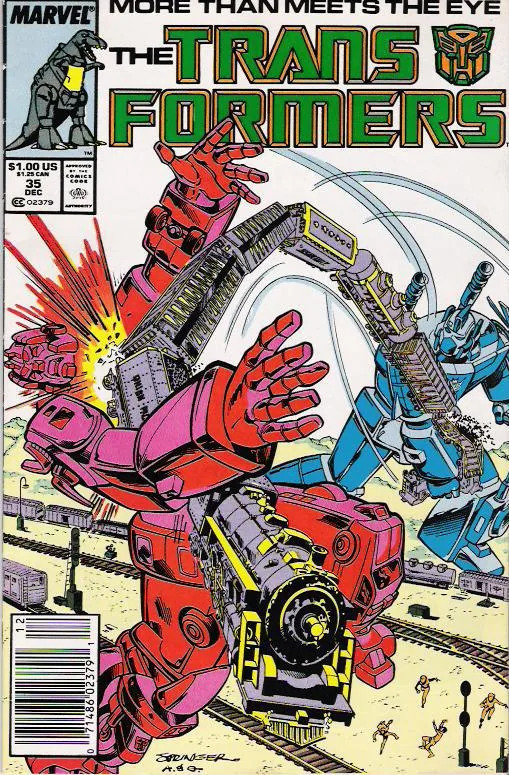
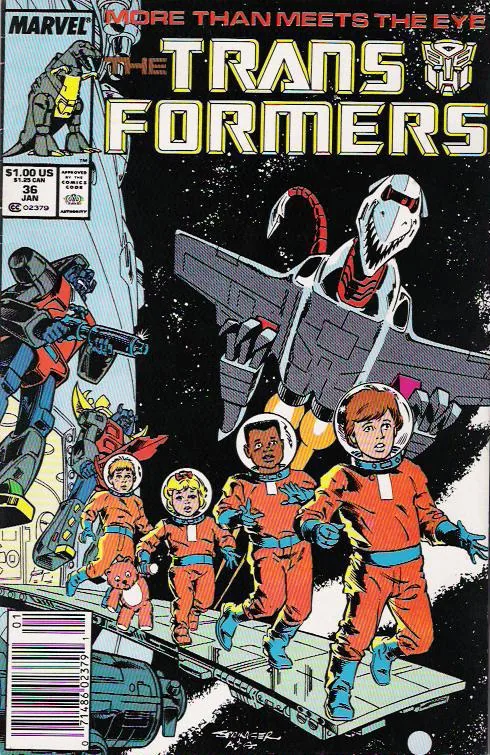
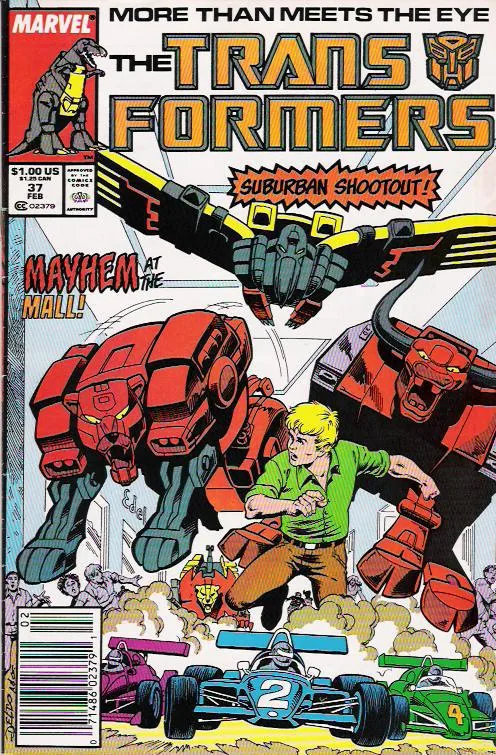
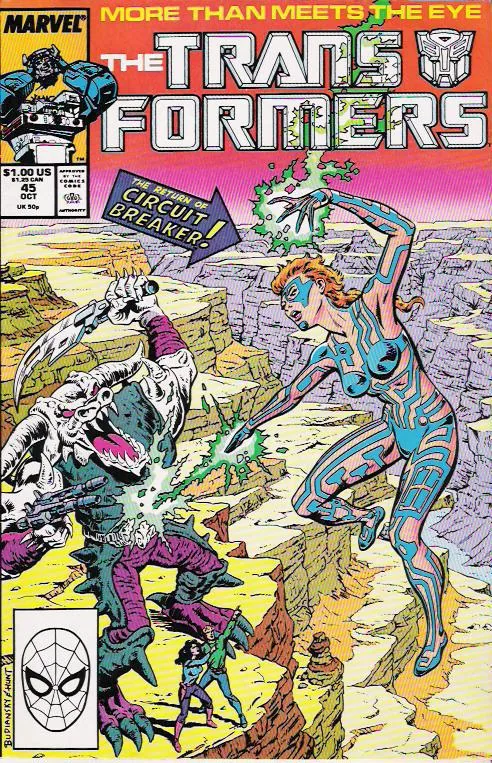
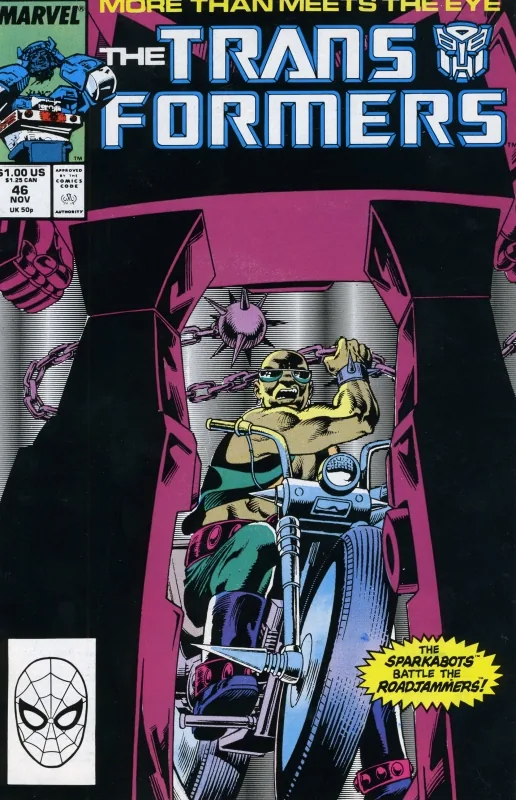
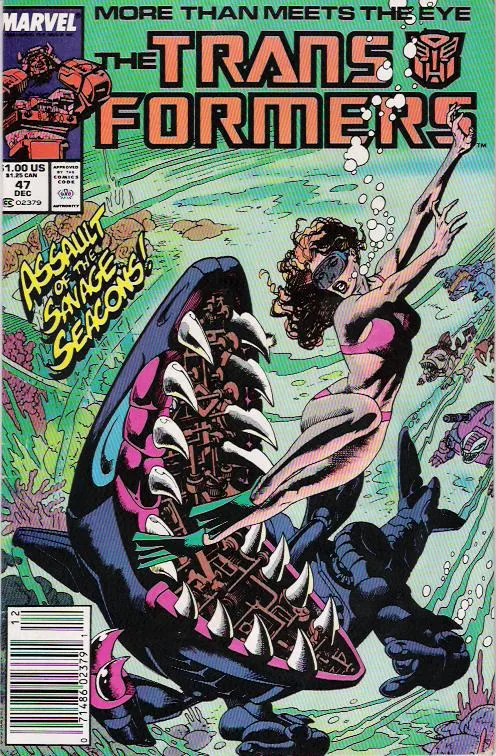
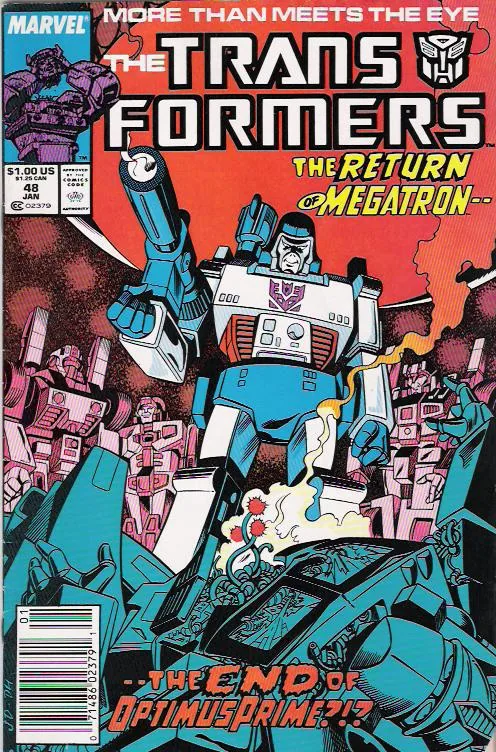
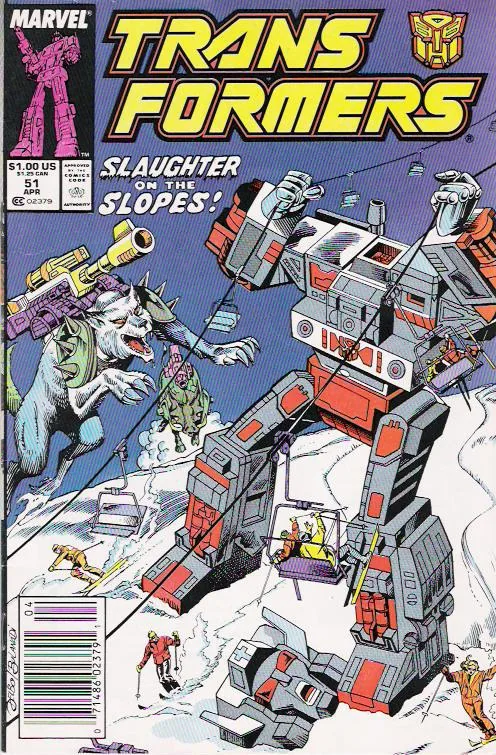
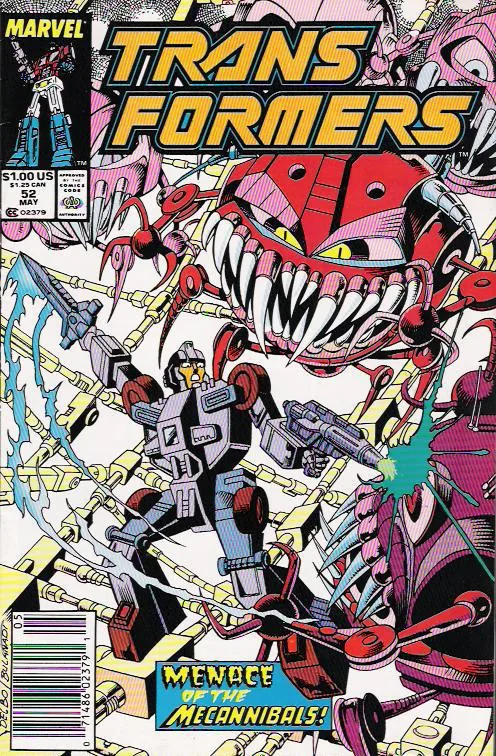
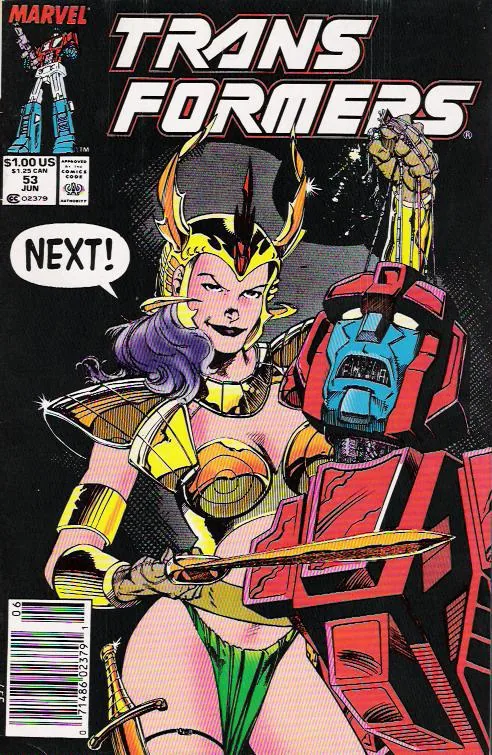
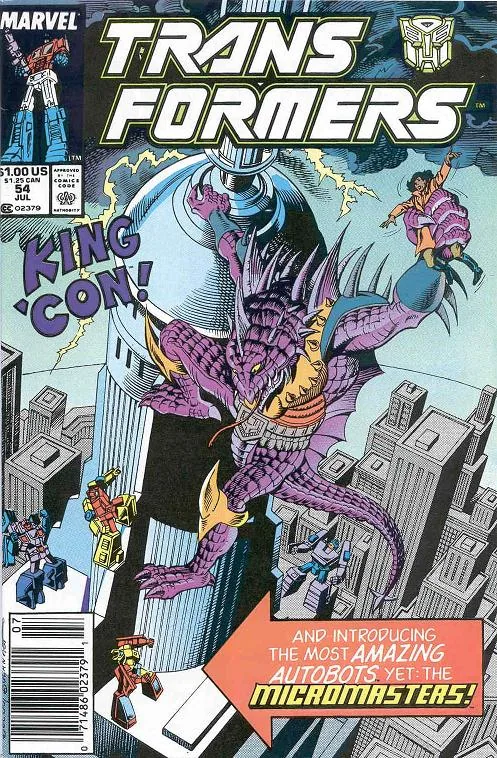
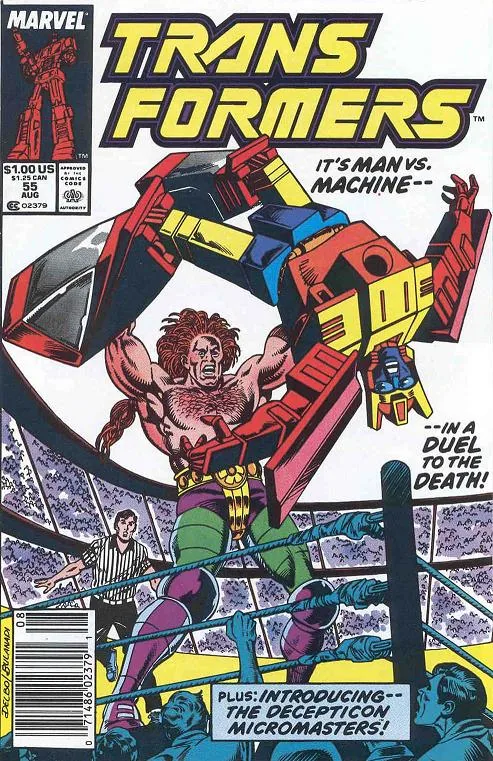
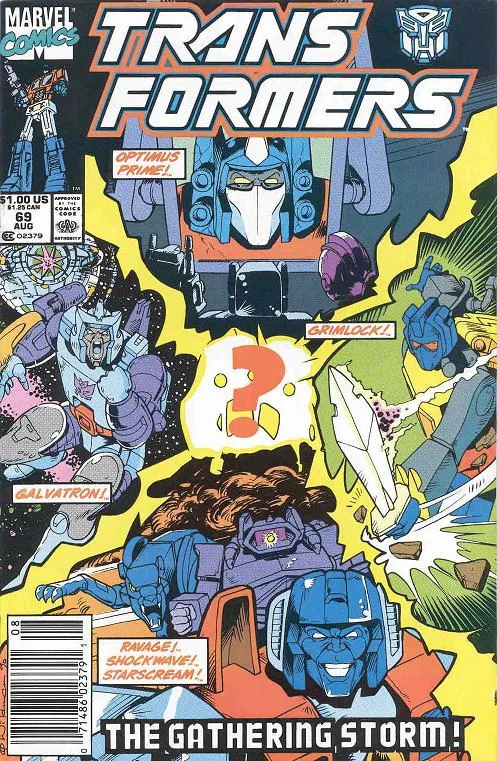
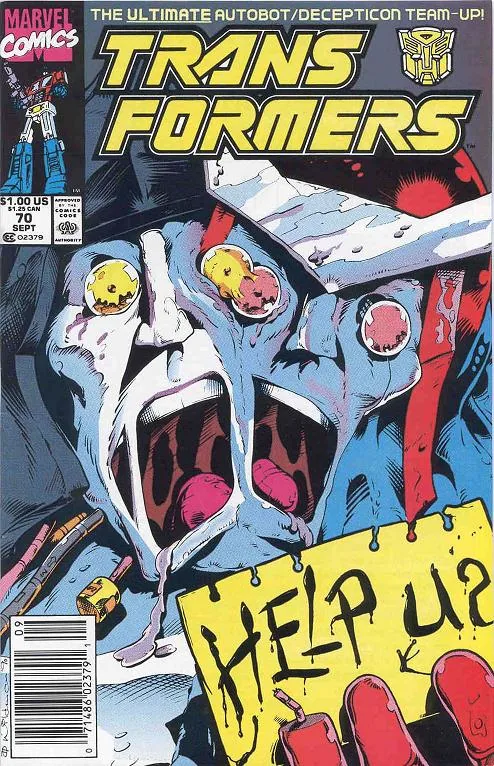
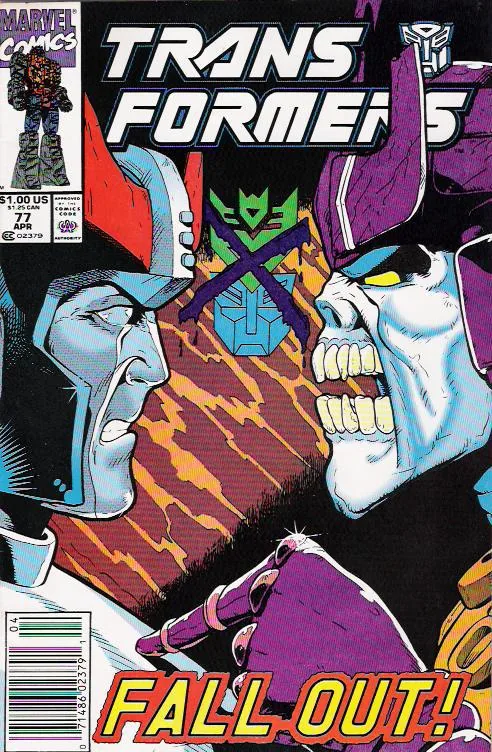
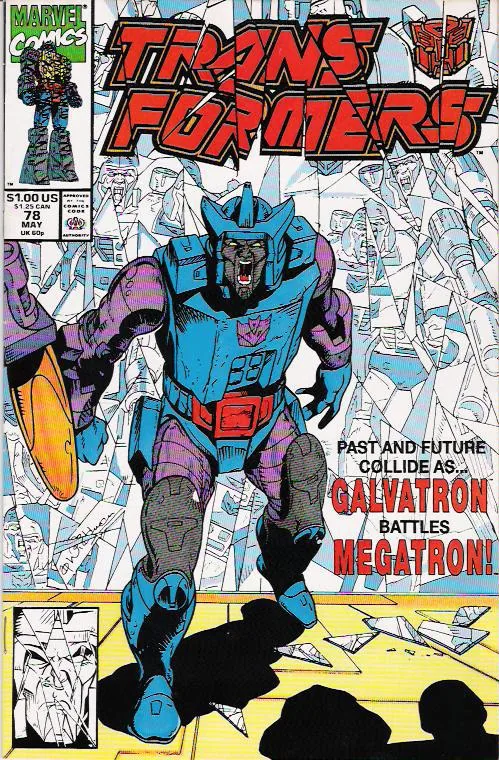
80 covers, each with an indicative collector value and a back-issue buy path. Values are indicative only; grade moves them a very long way.
Some links on this site are affiliate links. We may earn a commission at no extra cost to you.
Handle with care
Contested
Comics data is unusually messy: reprint credits, renumbering and first-appearance claims all contradict across sources. What we could not settle is recorded rather than smoothed over.
- Story titles are transcribed as Wikipedia's issue list renders them; on the printed covers and splash pages several carry an exclamation mark that the list omits or adds (for example #4 'The Last Stand', #5 'The New Order', #13 'Shooting Star', #43 'The Big Broadcast of 2006'). Treat trailing punctuation as low-confidence.
- Issues 33 and 34 reprint the Marvel UK serial 'Man of Iron', written by Steve Parkhouse with art by John Ridgway (UK parts 1-2, reprinted in US #33) and Mike Collins (UK parts 3-4, reprinted in US #34), recoloured by Nel Yomtov. Wikipedia's series-level credit box lists Bob Budiansky as writer of 17-42, which would sweep these two issues in; the story is not his. Both are given here under Parkhouse.
- Penciller of #36: Wikipedia's credit box gives José Delbo issues 37-42, leaving #36 unattributed. Issue-level sources credit Delbo on #36, which is used here. Low-confidence.
- Cover dates for #59, #60 and #61 reflect Marvel's 1989 switch from four-month to two-month advance dating: #59 'Mid-November 1989', #60 'December 1989', #61 'Mid-December 1989'. GCD renders #59 simply as 'November 1989'. Wikipedia's issue table in this range lists release dates, not cover dates, and is internally inconsistent (it gives #61 as October 1989).
- #21 is cover dated October 1986; GCD's key-date field for one variant reads 'October 1987 [October 1986]', an indexing artefact. Likewise #49 is February 1989, indexed by GCD as 'February 1988 [February 1989]'.
- First appearances are attributed within this title only. Several characters debuted elsewhere first: Goldbug in G.I. Joe and the Transformers #2, the Headmasters and Fortress Maximus in the Transformers: Headmasters miniseries (1987), and the Pretenders and Powermasters partly through Hasbro's toy line and UK material. Those entries are marked 'first appearance in this title'.
- Insecticon attribution: Shrapnel appears on Cybertron in #17, while Bombshell and Kickback appear in the Earth-based #21. Listing all three at #21 would be wrong for Shrapnel; the #21 entry credits Bombshell and Kickback only.
- Issue 55 pencils are shared: José Delbo with co-pencils credited to Bob Budiansky and Jim Fern per Wikipedia's credit box. Sources differ on who drew what.
- Synopses are condensed from the Wikipedia issue summaries, which are detailed and internally consistent but unsourced per-issue; they were cross-checked against tfwiki-derived and Fandom summaries where those were reachable. tfwiki.net itself returns an empty body to automated fetches and could not be used directly.
Keep reading
Other runs
1984-1992
The Transformers (UK)
Simon Furman’s weekly UK strips grew into their own epic: Death’s Head, the Wreckers, Time Wars. Faster, weird
2005-2018The Transformers (IDW)
A complete reboot. More Than Meets the Eye turned the cast into one of comics’ best ensembles: Megatron’s rede
2023-presentTransformers (Energon Universe)
Daniel Warren Johnson’s brutal, Eisner-winning relaunch inside the shared Energon Universe with G.I. Joe. The
ArchiveAll comics
Every run in one place.
ArchiveCharacters
Who these issues are about.